How Can I Combine the Golden Triangle with Ranthambore?
September 8, 2026
How Can I Combine the Golden Triangle with Ranthambore?
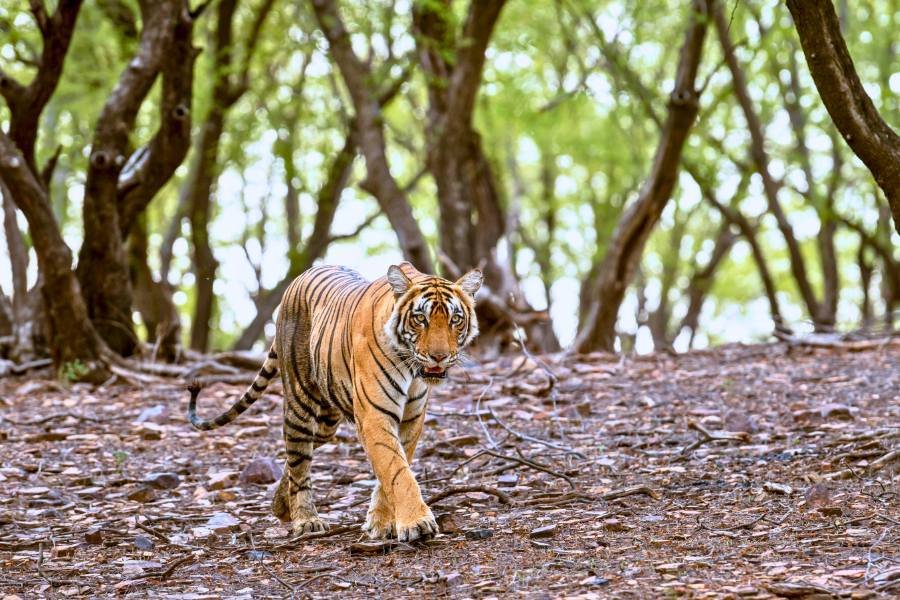
Combining India's famous Golden Triangle with a wildlife safari in Ranthambore is an excellent way to experience several different sides of the country in one trip. The traditional Golden Triangle connects Delhi, Agra, and Jaipur, giving travelers the opportunity to explore historic monuments, Mughal architecture, royal palaces, colorful markets, and vibrant local culture. Adding Ranthambore to this classic itinerary introduces a completely different experience: national parks, wildlife, forests, and the possibility of seeing a Bengal tiger in its natural habitat.
The best way to plan a Golden Triangle with Ranthambore itinerary is to create a logical route rather than adding the national park as an afterthought. For travelers starting in Delhi, one of the most convenient sequences is Delhi → Agra → Ranthambore → Jaipur → Delhi. If you are flying home from Jaipur, you can finish your trip there without returning to Delhi.
Depending on your travel style and available vacation time, this itinerary can work well in five, six, or seven days. However, allowing at least six days gives you more time to enjoy the major attractions without constantly rushing from one destination to another.
What Is the Golden Triangle in India?
The Golden Triangle is one of India's most popular tourist circuits, connecting three major destinations: Delhi, Agra, and Jaipur.
Delhi is India's capital and offers a mixture of historic monuments, modern neighborhoods, markets, museums, and diverse food. Agra is famous around the world for the Taj Mahal and is also home to important Mughal monuments such as Agra Fort. Jaipur, known as the Pink City, introduces travelers to Rajasthan's royal history through magnificent forts, palaces, observatories, and traditional markets.
The three cities are relatively well connected, making the Golden Triangle suitable for both first-time visitors and experienced travelers.
Adding Ranthambore changes the itinerary from a purely cultural and historical journey into a more diverse India holiday. Instead of visiting only monuments and cities, you can spend time in a wildlife reserve and experience Rajasthan's natural landscape.
Why Add Ranthambore to the Golden Triangle?
Ranthambore is one of the most popular wildlife destinations in northern India. It is particularly known for its tiger population, although sightings are never guaranteed.
The park offers more than the possibility of seeing a tiger. During a safari, you may encounter deer, crocodiles, monkeys, birds, antelope, and other wildlife. The landscape of forests, lakes, grasslands, and historic ruins creates an entirely different atmosphere from Delhi, Agra, or Jaipur.
A Golden Triangle with Ranthambore trip is especially appealing to travelers who want more variety from their India vacation. You can begin with the energy of Delhi, admire the Taj Mahal in Agra, experience a wildlife safari near Sawai Madhopur, and finish among the forts and palaces of Jaipur.
This combination is also suitable for families, couples, photographers, history enthusiasts, and adventure travelers.
What Is the Best Route?
For travelers starting and finishing in Delhi, the most practical route is generally:
Delhi → Agra → Ranthambore → Jaipur → Delhi
If you are flying out of Jaipur, the route becomes:
Delhi → Agra → Ranthambore → Jaipur
This sequence is useful because it creates a relatively smooth geographical journey instead of repeatedly traveling back through the same areas.
Another possible itinerary is:
Delhi → Agra → Jaipur → Ranthambore → Delhi
This can work depending on hotel bookings, transport availability, and your preferred safari schedule. However, if you want to finish in Jaipur, visiting Ranthambore between Agra and Jaipur is often particularly convenient.
How Many Days Do You Need?
The ideal length depends on how much sightseeing you want to do.
A quick five-day itinerary is possible, but it can feel busy. Six or seven days is generally more comfortable for first-time visitors.
Five-Day Golden Triangle and Ranthambore Itinerary
- Day 1: Delhi sightseeing
- Day 2: Delhi to Agra, Taj Mahal and Agra Fort
- Day 3: Agra to Ranthambore
- Day 4: Ranthambore safari and travel toward Jaipur
- Day 5: Jaipur sightseeing
This itinerary is suitable for travelers with limited vacation time, but you will need to keep your schedule organized.
Six-Day Itinerary
- Day 1: Explore Delhi
- Day 2: Delhi to Agra and Agra sightseeing
- Day 3: Agra to Ranthambore
- Day 4: Ranthambore safari
- Day 5: Ranthambore to Jaipur
- Day 6: Jaipur sightseeing
This is a better option because you have a dedicated day for your safari.
Seven-Day Itinerary
With seven days, you can slow the journey down and add an extra night where it matters most.
- Day 1: Delhi
- Day 2: Delhi sightseeing
- Day 3: Delhi to Agra
- Day 4: Agra to Ranthambore
- Day 5: Ranthambore safari
- Day 6: Ranthambore to Jaipur
- Day 7: Jaipur sightseeing
If wildlife is your primary interest, you can use the additional time for another safari.
Day 1: Start in Delhi
Begin your trip by exploring Delhi.
There are numerous attractions, so avoid trying to see everything in a single day. Choose a combination of Old Delhi and New Delhi attractions based on your interests.
Popular places include the Red Fort, Jama Masjid, Chandni Chowk, India Gate, Humayun's Tomb, Qutub Minar, and the Lotus Temple.
Old Delhi is particularly interesting for travelers who want to experience traditional markets and street food. New Delhi provides a different atmosphere, with broad avenues, government buildings, museums, and major landmarks.
If you have only one day, prioritize a few attractions rather than spending most of your time traveling between them.
Day 2: Delhi to Agra
Leave Delhi early and travel to Agra.
The journey can be made by train or private car. Trains can be convenient for travelers who want to avoid highway traffic, while a private car provides flexibility and allows you to travel directly between hotels.
Once you reach Agra, make the Taj Mahal your main attraction.
The Taj Mahal is best experienced without rushing. Allow enough time to walk through the gardens, appreciate the architecture, and explore the surrounding complex.
After visiting the Taj Mahal, explore Agra Fort. This enormous historic complex provides a fascinating look at Mughal history and offers excellent views toward the Taj Mahal from some locations.
Depending on your arrival time, you may also visit Mehtab Bagh or explore local handicraft shops.
Spending the night in Agra is generally more comfortable than attempting to combine the Taj Mahal with a long onward journey on the same day.
Day 3: Agra to Ranthambore
After breakfast, begin your journey from Agra toward Ranthambore.
The destination is generally the Sawai Madhopur area, which serves as the gateway to Ranthambore National Park.
This is one of the longer travel sections of the itinerary, so avoid scheduling too many activities around your arrival time.
A private car can be particularly convenient because it allows you to travel directly from your Agra accommodation to your Ranthambore-area hotel. Rail travel is another possibility, depending on the available schedule and your preferred travel arrangements.
Once you arrive, check into your hotel and relax.
If you have a suitable pre-booked safari later in the day, you may be able to go directly to the park. However, don't build your entire itinerary around an extremely tight connection. Travel delays can happen, and having some flexibility is valuable.
Day 4: Experience Ranthambore National Park
This is the day that makes the itinerary different from a traditional Golden Triangle tour.
Ranthambore safaris generally take place during designated time periods, and the exact availability depends on the park's operating arrangements and permits.
An early morning safari is a popular choice. The cooler conditions can make the experience more comfortable, and wildlife activity can vary throughout the day.
While tigers are one of the park's biggest attractions, remember that wildlife sightings are unpredictable. A successful safari does not depend entirely on seeing a tiger.
Take time to appreciate the entire environment. The forests, lakes, hills, birds, and historic structures contribute to the experience.
If your schedule permits, you can also consider visiting Ranthambore Fort or simply relaxing at your accommodation after the safari.
If wildlife is a major reason for your trip, staying for two nights and planning more than one safari can increase your opportunities to observe wildlife.
Day 5: Ranthambore to Jaipur
After your Ranthambore experience, travel to Jaipur.
Jaipur is approximately a few hours away by road, depending on your exact starting point, traffic, and route.
Once you arrive, spend the afternoon or evening exploring the city.
Jaipur is famous for its pink-colored historic architecture, royal palaces, traditional crafts, jewelry, textiles, and lively markets.
If you arrive early enough, you could visit Hawa Mahal or explore the markets around the old city.
Alternatively, simply check into your hotel and save the major sightseeing for the following day.
Day 6: Explore Jaipur
Use a full day to explore Jaipur.
Start with Amber Fort, one of the city's most impressive attractions. Located on a hill outside the central city, the fort combines dramatic scenery with elaborate architecture.
Continue to the City Palace and Jantar Mantar. Hawa Mahal is another essential stop, particularly for first-time visitors.
Other attractions include Jal Mahal and Albert Hall Museum.
Jaipur is also a great place to shop for traditional Rajasthani products. Depending on your interests, you can look for textiles, jewelry, handicrafts, blue pottery, leather goods, and souvenirs.
Don't make your schedule so full that you have no time to enjoy the city itself. Sitting down for a traditional meal or walking through a local market can be just as memorable as visiting another monument.
How Should You Travel Between Destinations?
Private Car
A private car is arguably the most convenient option for this itinerary.
You can leave when you want, stop for breaks, keep your luggage with you, and travel directly between hotels.
This is particularly useful for the Agra-to-Ranthambore and Ranthambore-to-Jaipur sections.
The disadvantage is that a private vehicle generally costs more than public transportation.
Train
Trains are a popular option for travelers moving between Delhi, Agra, Sawai Madhopur, and Jaipur.
They can be comfortable and economical, but schedules and seat availability vary. Check the current railway timetable before booking your itinerary.
Bus
Buses can be useful for budget travelers, particularly on routes between larger cities. However, coordinating multiple bus journeys with luggage and safari schedules may require more planning.
For a multi-city itinerary, many travelers prefer a combination of trains and private transfers.
How to Book a Ranthambore Safari
Ranthambore safari planning should be done before you finalize the rest of your itinerary.
Safari permits and preferred time slots may have limited availability. If wildlife viewing is important to you, don't assume that you can simply arrive at the park and find your preferred safari.
Plan your accommodation near Sawai Madhopur or the park area and coordinate your safari timing with your transportation.
You should also check the latest official park rules before traveling because safari zones, operating periods, entry procedures, and availability can change.
Most importantly, don't guarantee yourself a tiger sighting. Ranthambore is a wild environment, and every safari is different.
What Is the Best Time for This Trip?
The cooler months are generally comfortable for sightseeing in Delhi, Agra, and Jaipur. October through April is commonly preferred by travelers who want pleasant conditions for exploring monuments and cities.
Ranthambore requires a slightly different consideration. Wildlife conditions can vary by season, and warmer months can offer different safari experiences but may also involve intense heat.
Monsoon conditions can affect access and safari operations.
Before booking, check current weather forecasts, monument opening information, and Ranthambore's seasonal operating rules.
Tips for a Smooth Golden Triangle and Ranthambore Trip
First, avoid making the itinerary unnecessarily complicated. The biggest advantage of this route is that the destinations can be connected in a logical sequence.
Second, book important transport and safari arrangements ahead of time. This is especially important if you are traveling during a busy tourist season.
Third, leave some buffer time between major activities. A delayed train or traffic on the road should not cause you to miss a prepaid safari.
Fourth, pack according to the season. Comfortable walking shoes are essential because you will spend significant time exploring monuments and historic areas.
For Ranthambore, bring sun protection, comfortable clothing, a hat, sunglasses, and a camera if photography interests you.
Finally, keep your itinerary flexible enough to enjoy unexpected experiences. Some of the best travel memories come from local restaurants, markets, conversations, and small discoveries between the major attractions.
Is the Golden Triangle with Ranthambore Worth It?
Absolutely, especially if you want more than a traditional sightseeing holiday.
A classic Golden Triangle trip focuses heavily on history, architecture, culture, and city experiences. Adding Ranthambore introduces nature and adventure.
The Golden Triangle with Ranthambore is particularly worthwhile for travelers who have enough time to spend at least one night in the national park area.
It is also an excellent option for families. Children can see the Taj Mahal, explore forts and palaces, and then experience a safari. Couples can combine romantic monuments with wildlife and scenic landscapes. Photographers can enjoy architecture, street scenes, wildlife, and Rajasthan's colorful culture in one journey.
Common Mistakes to Avoid
One common mistake is trying to complete the entire itinerary in four or five days without allowing any flexibility.
Another is scheduling a safari immediately after a long journey without enough buffer time. If your safari is important, arrive in the Ranthambore area with enough time to comfortably reach your accommodation and prepare.
Travelers also sometimes underestimate how much time is needed in Jaipur. The city has enough attractions to justify a full day or more.
Finally, don't treat Ranthambore simply as a transportation stop. If you're adding a national park to your itinerary, give yourself enough time to actually enjoy the wildlife experience.
Final Suggested Itinerary
For most travelers, the following itinerary provides a good balance:
- Day 1: Delhi sightseeing
- Day 2: Delhi to Agra, Taj Mahal and Agra Fort
- Day 3: Agra to Ranthambore
- Day 4: Ranthambore safari
- Day 5: Ranthambore to Jaipur
- Day 6: Jaipur sightseeing
- Day 7: Jaipur departure or return to Delhi
This plan provides enough time to experience the highlights without making every day a race against the clock.
Conclusion
Combining the Golden Triangle with Ranthambore is one of the best ways to create a diverse northern India itinerary. You can experience Delhi's historic and modern attractions, admire the Taj Mahal in Agra, explore Rajasthan's wildlife in Ranthambore, and finish among Jaipur's spectacular forts and palaces.
The Golden Triangle with Ranthambore works particularly well when you follow the route Delhi → Agra → Ranthambore → Jaipur. This sequence keeps the journey relatively logical and makes it easy to finish in Jaipur or continue back to Delhi.
For a fast trip, allow at least five days. For a more relaxed experience, six or seven days is preferable. Plan your transportation and safari arrangements in advance, leave flexibility between activities, and remember that wildlife sightings can never be guaranteed.
With thoughtful planning, this itinerary can provide a memorable combination of India's iconic monuments, royal heritage, vibrant culture, and unforgettable wildlife experiences.
Frequently Asked Questions
1. Can I combine the Golden Triangle with Ranthambore in one trip?
Yes. Ranthambore can be added between Agra and Jaipur, creating a convenient route of Delhi, Agra, Ranthambore, and Jaipur. Six or seven days is a comfortable timeframe for this itinerary.
2. How many days do I need for the Golden Triangle and Ranthambore?
A minimum of five days is possible, but six or seven days is recommended. An additional night in Ranthambore is worthwhile if wildlife is a major priority.
3. Is Ranthambore closer to Agra or Jaipur?
Ranthambore is geographically positioned between the Agra and Jaipur portions of this circuit, making it practical to travel from Agra to Ranthambore and then continue toward Jaipur.
4. Should I book my Ranthambore safari in advance?
Yes. Safari permits and preferred time slots can have limited availability. Advance planning is recommended, particularly during popular travel periods.
5. Can I finish the trip in Jaipur instead of returning to Delhi?
Yes. If your onward flight or travel plans are from Jaipur, you can finish the itinerary in Jaipur. This can save time and avoid an unnecessary return journey to Delhi.