How Do I Travel from Delhi to Agra and Jaipur? Complete Guide
August 31, 2026
How Do I Travel from Delhi to Agra and Jaipur? Complete Guide
Traveling from Delhi to Agra and Jaipur is one of the most popular ways to experience northern India’s history, architecture, culture, food, and royal heritage in a relatively short trip. Together, Delhi, Agra, and Jaipur form the famous Golden Triangle, a route that connects India’s capital with the Taj Mahal and the colorful royal city of Rajasthan.
The journey can be completed in different ways depending on your budget, available time, and preferred travel style. You can travel by train, private car, bus, or a combination of transportation. For first-time visitors, a private car is often the easiest option because it gives you flexibility to stop along the way and customize your sightseeing schedule.
A typical itinerary begins in Delhi, continues to Agra, and then heads from Agra to Jaipur before returning to Delhi. With three to four days, you can see the major highlights without spending your entire holiday on the road. If you have more time, adding overnight stays and additional attractions makes the journey much more relaxed.
Whether you're planning a family vacation, romantic getaway, solo adventure, or short cultural holiday, understanding the travel options will help you build an itinerary that actually works.
What Is the Best Way to Travel from Delhi to Agra and Jaipur?
For most travelers, the best option depends on what they value most. Train travel is usually excellent for speed and affordability, while a private car provides the greatest flexibility. Buses can be economical, but they generally offer less convenience for travelers who want to visit multiple attractions along the route.
| Route | Approximate Distance | Typical Road Journey |
|---|---|---|
| Delhi to Agra | 230 km | Around 3–4 hours |
| Agra to Jaipur | 240 km | Around 4–5 hours |
| Jaipur to Delhi | 270 km | Around 5–6 hours |
Actual journey times depend heavily on traffic, road conditions, weather, stops, and your starting point within each city.
If your priority is seeing major attractions rather than simply reaching the next city, traveling by private car is particularly convenient. You can leave Delhi early, explore Agra, stay overnight, and continue toward Jaipur the following morning.
The Delhi to Agra and Jaipur route becomes much easier when you avoid trying to visit every attraction in every city. A focused itinerary allows you to enjoy the highlights without turning the trip into a race.
Delhi to Agra by Train
Train travel is one of the most popular ways to get from Delhi to Agra. Several services connect the two cities, and the journey can be considerably faster than driving during periods of heavy road traffic.
For travelers who want to maximize sightseeing time, an early train can be particularly useful. You can leave Delhi in the morning, arrive in Agra, visit the Taj Mahal and Agra Fort, and either return to Delhi or stay overnight before continuing to Jaipur.
One major advantage of taking the train is avoiding unpredictable highway traffic. Instead of sitting in a car wondering whether congestion will delay your arrival, you can use the journey to relax.
However, trains are less flexible than private transportation. If you want to stop at attractions between Delhi and Agra or change your schedule during the day, a car is more practical.
Always check the current railway timetable before booking because train schedules, operating days, fares, and availability can change.
Delhi to Agra by Car
Traveling from Delhi to Agra by car is one of the most convenient options for visitors who want a flexible itinerary. The major highway connection makes the journey relatively straightforward, although actual travel time depends on traffic and your departure location.
A private car allows you to start whenever you want. You can leave Delhi before sunrise, reach Agra in the morning, visit the Taj Mahal, have lunch, explore Agra Fort, and continue with additional sightseeing.
Another advantage is luggage. If you're traveling with suitcases, you don't need to carry them through railway stations or arrange transportation between multiple train stations and hotels.
A car also makes sense when traveling as a family or group because the total transportation cost can be divided among several people.
For a classic Golden Triangle itinerary, private transportation is often the easiest way to connect the three cities.
Delhi to Agra by Bus
Buses provide another option for reaching Agra, particularly for budget-conscious travelers. Several bus services operate between Delhi and Agra, with journey times varying according to the service and road conditions.
The main benefit is price. Bus travel can be cheaper than hiring a private vehicle, particularly for solo travelers.
The trade-off is flexibility. You generally follow the operator's departure schedule and won't have the same freedom to stop for photographs, meals, or sightseeing.
For travelers who simply want transportation from one city to another, buses can work well. For visitors building a sightseeing itinerary around the journey, trains or private cars may be more convenient.
How to Travel from Agra to Jaipur
Once you've finished exploring Agra, the next major part of the journey is traveling to Jaipur. The distance is roughly 240 kilometers by road.
Private car is one of the easiest choices because you can leave Agra whenever you're ready and reach Jaipur without changing vehicles. Depending on your itinerary, you can also stop at Fatehpur Sikri, a historic Mughal-era city located between Agra and Jaipur.
Fatehpur Sikri is particularly worthwhile for history and architecture enthusiasts. Its red sandstone buildings create a very different visual experience from the white marble of the Taj Mahal.
If you don't want to stop anywhere, the drive can be completed in several hours depending on traffic and road conditions.
For a relaxed Golden Triangle journey, spending at least one night in Agra before heading to Jaipur is generally more comfortable than trying to squeeze the entire route into one exhausting day.
Agra to Jaipur by Train
Train services also connect Agra and Jaipur. This can be an economical option if you prefer public transportation.
The main consideration is that train travel requires you to work around the railway schedule. You'll also need transportation between your hotel and the railway station.
For independent travelers who are comfortable navigating Indian railway stations, this can be an excellent option.
If you're traveling with children, elderly relatives, substantial luggage, or a larger group, however, a private car may be simpler.
Check the current train schedule and seat availability before planning your sightseeing around a specific departure.
Agra to Jaipur by Car
For many tourists, driving from Agra to Jaipur is the most convenient option. You can leave after breakfast, travel at your own pace, and stop at attractions along the way.
A particularly useful stop is Fatehpur Sikri. Depending on your schedule, you could spend a couple of hours exploring the complex before continuing toward Jaipur.
This makes the journey itself part of your holiday rather than simply transportation.
Another advantage is that your luggage stays with you. You don't have to check out of your hotel, take a taxi to the railway station, travel by train, find another taxi in Jaipur, and then check into your next hotel.
For couples and families, that simplicity can be worth paying extra for.
How to Travel from Jaipur to Delhi
After exploring Jaipur, you can return to Delhi by road, train, bus, or flight.
The most practical option depends on where your trip ends. If you're flying internationally from Delhi, a private car can be useful because it allows you to leave Jaipur according to your flight schedule.
Train services also connect Jaipur with Delhi, and these can be an efficient option for travelers who prefer rail transportation.
If you're taking a train, leave enough time between your expected arrival in Delhi and your flight. Unexpected delays can happen, and an international flight is not something you want to gamble on.
A private transfer gives you more control over departure timing but is still subject to road traffic.
How Many Days Do You Need for Delhi, Agra and Jaipur?
A good Golden Triangle trip takes at least three days, but four to six days is much more comfortable.
A very fast itinerary could look like this:
- Day 1: Delhi sightseeing → Agra → overnight in Agra
- Day 2: Taj Mahal → Agra Fort → Jaipur → overnight in Jaipur
- Day 3: Jaipur sightseeing → Delhi
This works, but it can feel rushed.
A better four-day itinerary would allow more time:
- Day 1: Explore Delhi → overnight in Delhi
- Day 2: Delhi to Agra → Taj Mahal → Agra Fort → overnight in Agra
- Day 3: Agra → Fatehpur Sikri → Jaipur → overnight in Jaipur
- Day 4: Jaipur sightseeing → return to Delhi
With five or six days, you can slow down significantly and explore each destination more thoroughly.
How Long Should You Stay in Agra?
For most first-time visitors, one night in Agra is sufficient to see the major attractions without rushing.
The Taj Mahal deserves several hours, particularly if you want to visit around sunrise. Afterward, you can explore Agra Fort and perhaps another nearby attraction.
If you have additional time, Mehtab Bagh and Itimad-ud-Daulah are worthwhile additions.
Staying overnight also gives you the advantage of not having to rush through the Taj Mahal and immediately begin a long drive toward Jaipur.
Agra may be smaller than Delhi or Jaipur, but its concentration of Mughal architecture makes it an important part of the Golden Triangle.
How Long Should You Stay in Jaipur?
Jaipur deserves at least one full day, although two days is preferable if your schedule allows.
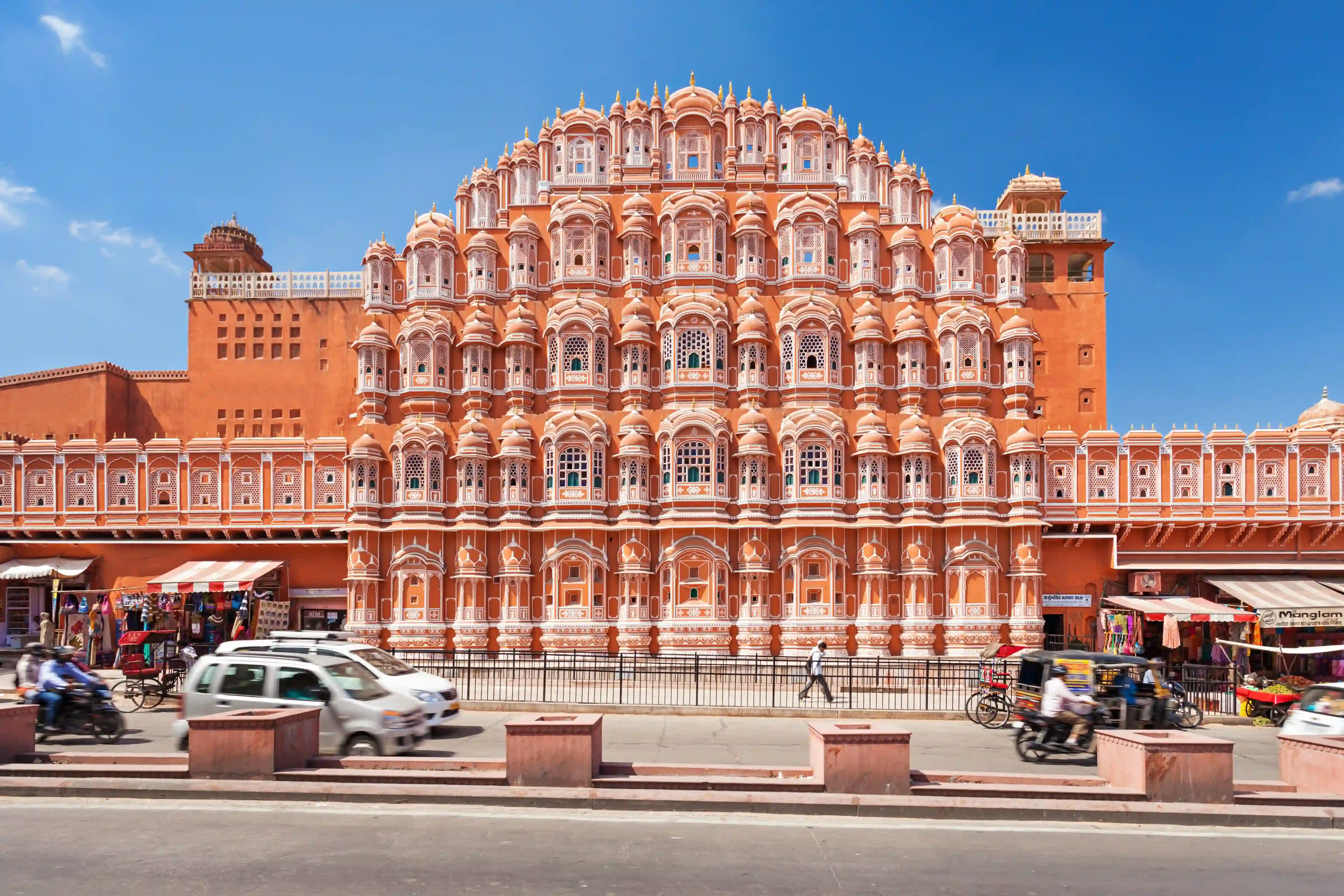
The city contains numerous attractions, including Amber Fort, City Palace, Hawa Mahal, Jantar Mantar, and several other historic sites.
One day can cover the major highlights if you start early. Two days allow you to explore at a more relaxed pace and include shopping, local food, museums, and less-visited attractions.
Jaipur is also different from Agra. Agra is heavily associated with Mughal architecture and the Taj Mahal, while Jaipur introduces you to Rajput history, palace architecture, colorful markets, and Rajasthan's distinctive culture.
What Is the Best Time of Year for the Golden Triangle?
The most comfortable period for many travelers is October through March. Temperatures are generally more suitable for sightseeing than during the hottest summer months.
December and January can bring cool mornings and occasional fog, particularly around Agra and Delhi. Fog can affect visibility and transportation, so travelers should maintain some flexibility.
April through June can become extremely hot. If you're visiting during this period, early-morning sightseeing is especially important.
The monsoon season, generally around July through September, brings humidity and rainfall. The landscape can become greener, but outdoor sightseeing may be less predictable.
Regardless of the season, start major sightseeing early whenever possible.
What Is the Best Time to Visit the Taj Mahal?
For most visitors, sunrise is the best time to visit the Taj Mahal. Morning light is softer, temperatures are usually more pleasant, and the experience can feel calmer than during peak daytime hours.
The Taj Mahal follows a sunrise-to-sunset visitor schedule, with Friday being the regular weekly closure day for general visitors.
If the Taj Mahal is the main reason for your Agra visit, structure your itinerary around it rather than trying to fit it into a narrow gap between other attractions.
Arriving early also means you'll have more time afterward for Agra Fort and other sites.
Should You Hire a Private Driver?
If you're visiting all three cities, hiring a private driver can make the journey considerably easier.
You don't have to negotiate separate taxis for every intercity journey, arrange station transfers, or carry luggage through public transportation.
A driver can also help you maintain flexibility. If you finish sightseeing earlier than expected, you can leave. If you want to stop somewhere along the route, you can discuss the option.
However, always clarify what is included in the transportation package. Ask whether fuel, tolls, parking, driver's expenses, interstate taxes, and waiting time are included.
Also confirm whether the vehicle is available throughout your entire itinerary or only for individual transfers.
Is the Delhi to Agra and Jaipur Trip Safe?
The Golden Triangle is one of India's most established tourist routes, but normal travel precautions still apply.
Keep important documents secure, use reputable transportation providers, and avoid accepting unsolicited offers from strangers at stations or tourist sites.
When hiring a private car, choose a reputable company and confirm the vehicle and driver details before departure.
If you're traveling independently by train, keep your luggage secure and arrive at the station with enough time to locate your platform.
The biggest practical challenge for many visitors isn't safety but fatigue. Don't underestimate how tiring consecutive early mornings and long drives can become.
What Should You Pack?
Pack according to the season, but keep your luggage manageable.
Comfortable walking shoes are essential because all three destinations involve substantial sightseeing on foot.
You may also want:
- Lightweight clothing for warmer months
- A jacket for winter mornings
- Sunglasses and sunscreen
- A reusable water bottle
- Identification and travel documents
- Phone and charging equipment
- Any required medications
- A small day bag
If you're visiting religious sites, modest clothing is useful.
A smaller bag also makes security checks and transportation much easier.
How Much Does a Delhi-Agra-Jaipur Trip Cost?
The cost varies enormously depending on your transportation, hotels, food, guides, and travel season.
Budget travelers can use trains and buses and stay in inexpensive hotels. Mid-range travelers can combine comfortable hotels with private transportation. Luxury travelers can choose premium hotels, private guides, and dedicated vehicles.
Your transportation choice often makes the biggest difference.
| Travel Style | Transportation | Accommodation | Overall Experience |
|---|---|---|---|
| Budget | Train/bus | Budget hotels | Affordable and independent |
| Mid-range | Private car/train | 3–4 star hotels | Comfortable and flexible |
| Premium | Private car | Luxury hotels | Convenient and personalized |
Rather than choosing the cheapest possible option, think about what matters most. Saving a little money isn't necessarily worthwhile if you spend hours dealing with inconvenient connections.
Delhi to Agra and Jaipur: Best Route
For first-time visitors, the classic route is:
Delhi → Agra → Fatehpur Sikri → Jaipur → Delhi
This route makes geographic sense and creates a natural progression through India's history.
Delhi introduces you to India's capital and its mixture of Mughal, colonial, and modern architecture.
Agra focuses heavily on Mughal heritage and the Taj Mahal.
Jaipur then shifts toward Rajasthan's Rajput history, forts, palaces, and colorful markets.
This progression gives the trip variety rather than making every day feel similar.
Sample Five-Day Golden Triangle Itinerary
Day 1: Delhi
Explore Old Delhi, the Red Fort area, Jama Masjid, India Gate, Humayun's Tomb, or Qutub Minar depending on your interests.
Stay overnight in Delhi.
Day 2: Delhi to Agra
Leave early for Agra.
Visit the Taj Mahal and Agra Fort.
Spend the night in Agra.
Day 3: Agra to Jaipur
Visit another Agra attraction in the morning if time allows.
Travel toward Jaipur and stop at Fatehpur Sikri.
Continue to Jaipur and check into your hotel.
Day 4: Jaipur
Explore Amber Fort, City Palace, Hawa Mahal, Jantar Mantar, and local markets.
Enjoy a Rajasthani dinner in the evening.
Day 5: Jaipur to Delhi
Enjoy a relaxed morning before returning to Delhi.
If you have an evening flight, allow plenty of extra travel time.
Common Mistakes to Avoid
One of the biggest mistakes travelers make is trying to see too much. India looks compact on a map, but traffic, crowds, security procedures, and sightseeing time can add up quickly.
Another mistake is not checking the weekly closure days of major attractions.
Travelers also sometimes underestimate the importance of starting early. Visiting the Taj Mahal at midday during a hot season can be significantly less comfortable than going in the morning.
Don't book an international flight immediately after a long road journey unless you have a generous buffer.
Finally, don't make the trip only about famous photographs. Eat local food, explore markets, talk with guides, and leave some unscheduled time.
Final Thoughts
Traveling from Delhi to Agra and Jaipur is one of the most rewarding short itineraries in northern India. The route combines enormous historical significance with beautiful architecture, distinctive cuisine, colorful markets, and completely different regional cultures.
For maximum convenience, a private car is an excellent choice because it lets you control your schedule and stop along the way. Trains are ideal for travelers who prioritize speed and affordability, while buses can work well for budget-conscious visitors.
A classic Delhi to Agra and Jaipur itinerary should begin with Delhi, continue to Agra for the Taj Mahal and Mughal monuments, and then move toward Jaipur for forts, palaces, and Rajasthani culture.
If possible, allow four to six days rather than trying to squeeze everything into a couple of rushed days. Start sightseeing early, keep your itinerary realistic, and leave some room for unexpected discoveries.
The Golden Triangle isn't just a route between three cities. It's a journey through several layers of Indian history and culture—and with the right planning, you can experience a remarkable amount of it without needing a long vacation.
For travelers looking to organize their itinerary efficiently, a well-planned Delhi to Agra and Jaipur journey can combine major landmarks with comfortable transportation and enough time to enjoy each destination.