How Many Days Do You Need for a Golden Triangle India Tour?
August 15, 2026
How Many Days Do You Need for a Golden Triangle India Tour?
Quick Answer: How Many Days Are Enough?
If you are planning your first trip to India and wondering how long you need for the classic Delhi, Agra, and Jaipur circuit, 6 to 8 days is a comfortable range for most travelers. A six-day itinerary covers the essential attractions at a fairly active pace, while seven or eight days allows you to slow down, enjoy local experiences, and handle travel between cities without feeling constantly rushed. If you have only four or five days, the route is still possible, but you will need to prioritize the major landmarks and accept a faster schedule.
A well-planned Golden Triangle India Tour typically begins in Delhi, continues to Agra, and finishes in Jaipur, although the direction can be reversed depending on your flights and travel arrangements. Delhi deserves around two days because the city is enormous and its attractions are widely spread out. Agra can usually be explored in one full day with an overnight stay, while Jaipur benefits from two or three days because of its forts, palaces, markets, and cultural attractions.
The right duration ultimately depends on your travel style. Do you want to photograph every major monument, enjoy leisurely breakfasts, shop in local markets, and have time for unexpected discoveries? Or would you rather wake up early, visit the highlights, and move on? For most first-time visitors, 7 days is an excellent sweet spot.
Golden Triangle India Tour at a Glance
| Destination | Recommended Stay | Main Experiences |
|---|---|---|
| Delhi | 2 days | Red Fort, India Gate, Qutub Minar, Humayun's Tomb, Old Delhi |
| Agra | 1–2 days | Taj Mahal, Agra Fort, Mehtab Bagh |
| Jaipur | 2–3 days | Amber Fort, City Palace, Hawa Mahal, Jantar Mantar, markets |
| Total | 6–8 days | A balanced first-time India experience |
Why the Golden Triangle Takes 6 to 8 Days
The Golden Triangle looks simple on a map, but each destination offers a very different experience. Delhi is a sprawling capital with layers of ancient, Mughal, colonial, and contemporary history. Agra is more compact but contains some of India's most famous monuments, including the Taj Mahal and Agra Fort. Jaipur introduces travelers to Rajasthan's colorful architecture, royal heritage, bazaars, cuisine, and distinctive cultural traditions.
Travel time also needs to be considered. Even when the distance between two destinations appears manageable, road traffic, hotel check-in times, sightseeing stops, meals, and unexpected delays can affect your schedule. Building your itinerary around the assumption that every transfer will happen exactly on time is like balancing a glass of water on a moving car—you might manage it, but why make the journey harder than necessary?
Six days is suitable for travelers who want efficiency. Seven or eight days is better for travelers who want a combination of sightseeing and relaxation. If you have ten days or more, you can add experiences such as Ranthambore, Fatehpur Sikri, local village visits, cooking experiences, additional shopping time, or another Rajasthan destination.
Day 1 and 2: Explore Delhi
Delhi should not be treated simply as the place where your international flight arrives. It is a destination with enough history and culture to fill several days. For a first visit, two days gives you enough time to experience the major highlights without trying to cross the entire city every few hours.
Day 1: Old Delhi and Central Delhi
Start your first sightseeing day with Old Delhi, where narrow streets, historic buildings, busy markets, and traditional food create an atmosphere unlike anywhere else on the itinerary. The Red Fort is an obvious starting point, followed by Jama Masjid and the lanes of Chandni Chowk.
A rickshaw ride through the old market area can be an enjoyable way to experience the neighborhood without trying to navigate every street on foot. You can also sample traditional North Indian food, although visitors should choose reputable establishments and take sensible precautions with unfamiliar food.
Later, move toward central Delhi. India Gate and the surrounding ceremonial area offer a completely different architectural character. The contrast between Old Delhi's crowded lanes and the broad avenues of central Delhi helps explain why the capital can feel like several cities in one.
Day 2: Mughal and Historical Delhi
Use your second day for attractions such as Humayun's Tomb and Qutub Minar. Both are significant historical sites and offer excellent opportunities for photography and architecture enthusiasts.
You could also visit Lodhi Garden, explore a museum, spend time shopping, or enjoy one of Delhi's many restaurants. Don't make the mistake of believing that every hour needs to contain a monument. Sometimes the best travel memories come from sitting down for chai, wandering through a market, or watching everyday life unfold.
If you arrive late in Delhi on your first day, consider adding an extra night. Starting a major sightseeing itinerary immediately after a long international flight can leave you exhausted before the journey really begins.
Day 3: Delhi to Agra
The journey from Delhi to Agra is an important part of the itinerary because it moves you from India's modern capital toward the heart of Mughal heritage.
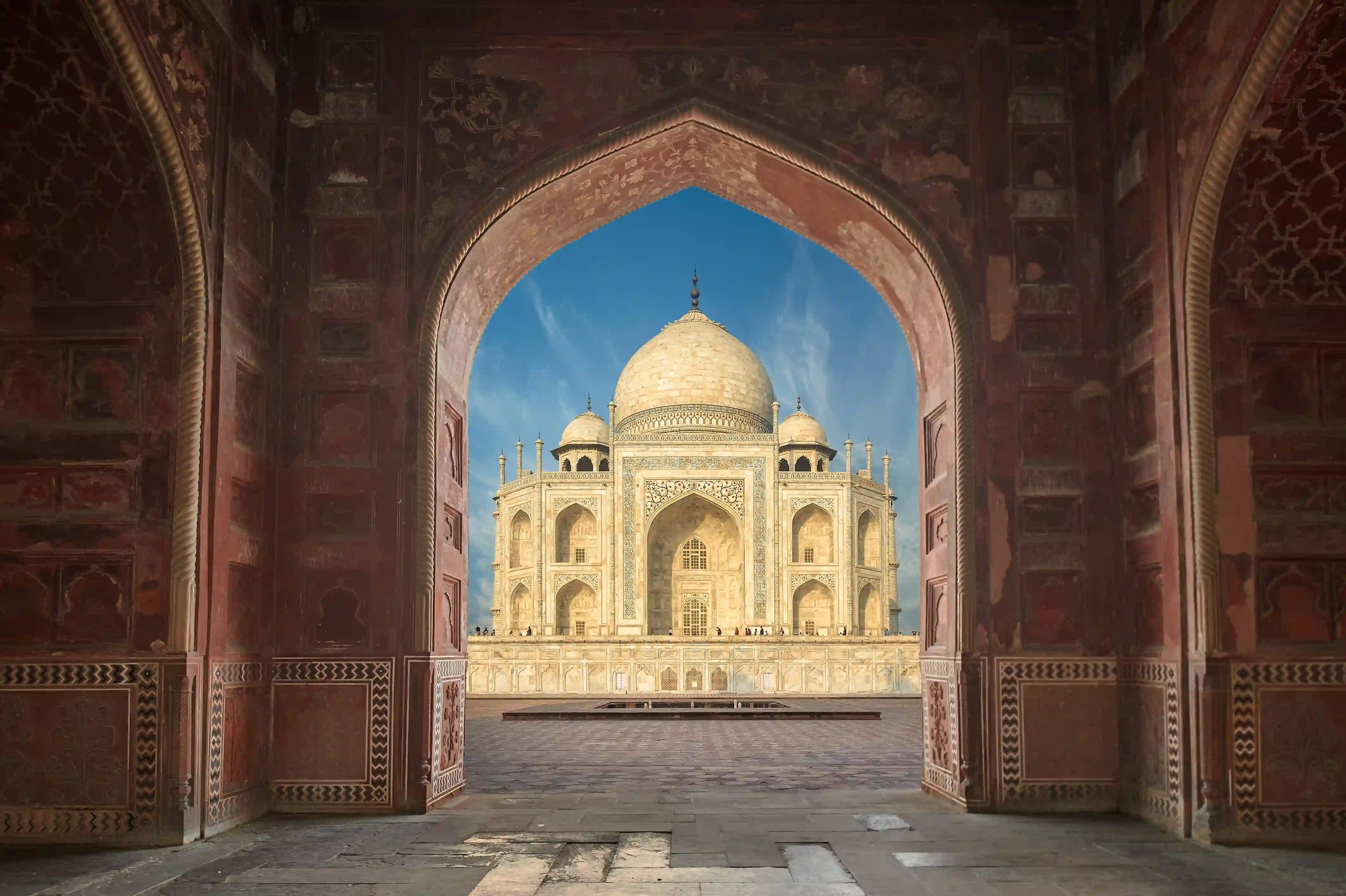
Once you arrive in Agra, visit Agra Fort, an enormous historical complex associated with the Mughal emperors. Its courtyards, palaces, gates, and views toward the Taj Mahal provide useful historical context for understanding the region.
The Taj Mahal should receive more than a quick photograph. Take your time to appreciate the symmetry, marble craftsmanship, gardens, surrounding architecture, and changing appearance of the monument as the light shifts.
Should You Stay Overnight in Agra?
For most travelers, one night is recommended. An overnight stay gives you flexibility around the Taj Mahal and prevents the day from becoming an exhausting round trip from Delhi.
Photography enthusiasts may want two nights. This provides more opportunities to explore Mehtab Bagh and additional viewpoints, while history lovers can investigate other Mughal sites around Agra.
For travelers with very limited time, Agra can be visited as a day trip from Delhi. However, the overnight option usually produces a more relaxed experience.
Day 4: Agra to Jaipur
After completing your Agra sightseeing, continue toward Jaipur, Rajasthan's famous Pink City.
Depending on your schedule, you can consider stopping at Fatehpur Sikri, the historic Mughal city located between Agra and Jaipur. The complex offers impressive architecture and can be a useful addition if you enjoy history.
Once you reach Jaipur, use the evening for something easy. Walk around a nearby market, enjoy a Rajasthani dinner, or relax at your hotel.
This is one reason an eight-day itinerary can be preferable to a six-day itinerary: you don't have to turn every travel day into another full sightseeing marathon.
Days 5 and 6: Discover Jaipur
Jaipur is where many travelers wish they had planned an extra day. The city is filled with forts, palaces, temples, observatories, markets, workshops, and restaurants.
Day 5: Amber Fort and Jaipur's Royal Heritage
Begin with Amber Fort, located outside the main center of Jaipur. Its hilltop setting, courtyards, gateways, decorative halls, and historical significance make it one of the highlights of the entire Golden Triangle.
Allow enough time for the visit rather than rushing through the fort simply to reach the next attraction. Nearby viewpoints and landmarks can also be incorporated depending on your schedule.
Later, return toward Jaipur and visit Jal Mahal from an appropriate viewpoint. In the evening, explore a market or enjoy a traditional Rajasthani meal.
Day 6: City Palace, Hawa Mahal and Jantar Mantar
Your second full Jaipur day can focus on the historic center. City Palace, Hawa Mahal, and Jantar Mantar can be combined efficiently because they are relatively close to one another.
Hawa Mahal is particularly recognizable for its ornate façade, while Jantar Mantar provides an interesting insight into historical astronomy and scientific observation.
After visiting the major landmarks, leave some time for Jaipur's bazaars. You may find textiles, jewelry, handicrafts, block-printed fabrics, blue pottery, and other traditional products.
A Jaipur itinerary becomes much more enjoyable when you leave room for browsing rather than treating shopping as another timed appointment.
Is 5 Days Enough for the Golden Triangle?
Yes, but it will be fast.
A five-day itinerary might include Delhi arrival and limited sightseeing on the first day, a full day in Delhi on the second, travel from Delhi to Agra on the third, Agra to Jaipur on the fourth, and Jaipur sightseeing followed by departure on the fifth day.
The biggest disadvantage is that you have little room for delays or relaxation. Jaipur, in particular, deserves more than a few rushed hours if you want to appreciate the city properly.
A five-day trip is best suited to experienced travelers who are comfortable with early mornings and efficient transfers. If you are visiting India for the first time, adding at least one or two days can make a substantial difference.
Is 6 Days a Good Duration?
Six days is a practical compromise for travelers who have limited vacation time.
You can allocate two days to Delhi, one day and night to Agra, and two days to Jaipur, with the remaining time used for transfers and departure arrangements.
The key is organization. Group Delhi attractions by location, arrange transportation in advance, and avoid putting too many activities into travel periods.
A six-day Golden Triangle India Tour works especially well when your flights align conveniently with the itinerary and you are comfortable maintaining an active schedule.
Why 7 Days Is the Sweet Spot
For many travelers, seven days offers the best balance.
You have enough time for two days in Delhi, a meaningful Agra visit, and two full days in Jaipur without needing to turn every morning into a race. You can also build some flexibility around travel.
A seven-day itinerary might look like this:
- Day 1: Arrive in Delhi
- Day 2: Delhi sightseeing
- Day 3: Delhi to Agra
- Day 4: Agra to Jaipur
- Day 5: Jaipur sightseeing
- Day 6: Jaipur sightseeing
- Day 7: Departure or onward travel
This structure works because it gives each destination its own identity. Delhi is not just an airport stop, Agra is not just a Taj Mahal photograph, and Jaipur is not reduced to a handful of monuments.
Why 8 Days Can Be Even Better
If your schedule permits, an eight-day itinerary adds valuable breathing room.
You might use the additional day for a deeper Delhi experience, a second night in Agra, or an additional day in Jaipur. Alternatively, you can keep the basic itinerary and use the extra day as a flexible buffer.
That flexibility matters in India. Traffic, weather, transportation schedules, crowds, and personal energy levels can all affect how much you accomplish in a day.
An extra day is not wasted time. It is what allows you to enjoy an unexpected restaurant, spend longer photographing a monument, browse a market without watching the clock, or simply recover after a busy travel day.
Should You Add Ranthambore?
If you have more than a week, adding Ranthambore National Park is an excellent option for travelers interested in wildlife.
A classic Golden Triangle focuses heavily on history and architecture. Ranthambore changes the experience by introducing forests, lakes, wildlife, and safari drives.
A comfortable extended itinerary would generally require 8 to 10 days, with two nights around Ranthambore when possible. This provides opportunities for one or more safari drives and gives you a chance to experience a completely different side of northern India.
Remember that wildlife sightings cannot be guaranteed. A tiger may appear during your first safari, or you may spend your time observing deer, crocodiles, birds, langurs, and other animals. The unpredictability is part of what makes a safari exciting.
Best Route for the Golden Triangle
The classic route is:
Delhi → Agra → Jaipur
This sequence is popular because it follows a practical geographic progression and connects three destinations with very different identities.
Delhi introduces you to the capital's historical and contemporary character. Agra takes you deeper into Mughal heritage, while Jaipur introduces the architecture and culture of Rajasthan.
Some travelers choose the reverse route:
Delhi → Jaipur → Agra
This can work perfectly well depending on your flight arrangements and transportation. There is no rule requiring you to follow one direction.
The best itinerary is the one that fits your arrival and departure points while minimizing unnecessary backtracking.
How Should You Travel Between Cities?
Private Car
A private vehicle is one of the most convenient options for a Golden Triangle journey. It gives you door-to-door transportation and allows you to make stops along the route.
It can be particularly useful for families, couples, and travelers carrying substantial luggage.
Train
India's rail network can provide an efficient way to travel between major cities. Depending on your schedule, trains may save time compared with road travel.
However, always check current train schedules and allow sufficient time around departures and arrivals.
Combining Car and Train
You don't necessarily have to choose one method for the entire trip. Some travelers use trains for selected journeys and private cars for others.
Your choice should depend on budget, comfort, group size, travel dates, and how much flexibility you want.
Best Time to Take a Golden Triangle Tour
The ideal time depends on your tolerance for heat, your sightseeing priorities, and your broader travel plans.
The cooler months are generally popular for visiting Delhi, Agra, and Jaipur because walking around forts and monuments can be more comfortable. Peak periods can also bring higher demand for hotels and attractions.
Hotter months may be challenging for travelers who are not accustomed to high temperatures, particularly during afternoon sightseeing. Monsoon conditions can also affect travel plans.
Rather than relying solely on generic seasonal advice, check current weather conditions, attraction opening schedules, transportation availability, and local travel information before your trip.
How to Make the Trip More Comfortable
The best way to improve your itinerary is to reduce unnecessary pressure.
Start your sightseeing early when practical, particularly for major attractions. Group nearby sites together instead of crossing a large city multiple times. Keep drinking water with you and wear comfortable shoes because many historic sites involve considerable walking.
Don't schedule your arrival day as though you have already been sleeping in the destination for a week. If you arrive after a long international flight, rest may be more valuable than another monument.
Also leave some unscheduled time. A little empty space in an itinerary can be surprisingly valuable.
Golden Triangle for Families
Families can enjoy this route enormously, but a slower itinerary is usually better.
Children may be fascinated by the forts, palaces, markets, and the Taj Mahal, but moving hotels every night can become tiring. An itinerary of 7 to 8 days allows families to balance sightseeing with rest.
Private transportation can also make the trip easier because you have more control over meal breaks, luggage, and daily timing.
If children are particularly interested in animals, consider extending the trip with Ranthambore.
Golden Triangle for Couples and Honeymooners
Couples often benefit from slowing the itinerary down rather than trying to visit every possible attraction.
Agra's Taj Mahal provides an obvious romantic highlight, while Jaipur offers beautiful heritage architecture, boutique hotels, rooftop restaurants, and colorful markets.
For honeymooners, a 7 to 9-day itinerary allows time for comfortable hotels, private sightseeing, memorable meals, and a less rushed pace.
The aim should be to create memories, not simply collect photographs.
Common Mistakes to Avoid
One of the most common mistakes is trying to complete the Golden Triangle in three or four days. While technically possible, the result is often an exhausting series of early mornings and long transfers.
Another mistake is underestimating Delhi's size. Attractions that appear close on a map can take considerable time to reach depending on traffic.
Travelers also sometimes spend too little time in Jaipur. The city is not simply a place to visit Amber Fort and leave. Its markets, architecture, food, and cultural experiences deserve attention.
Finally, don't make your itinerary so rigid that a small delay ruins the entire day. Build reasonable buffers into your schedule.
How Much Does a Golden Triangle Trip Cost?
The price varies enormously depending on your accommodation, transportation, season, guides, activities, and travel style.
Budget travelers can use economical hotels and public transportation. Mid-range travelers often choose comfortable hotels, private vehicles, and selected guided experiences. Luxury travelers can choose heritage properties, premium transportation, private guides, and upscale dining.
Instead of focusing only on the cheapest package, consider what is included. Transportation, accommodation, entrance fees, guides, meals, and airport transfers can all affect the final price.
A transparent itinerary with clearly defined inclusions is generally easier to compare than a headline price that leaves important services out.
7-Day Sample Itinerary
Here is a practical seven-day structure:
- Day 1: Arrive in Delhi and relax or explore nearby attractions.
- Day 2: Full-day Delhi sightseeing.
- Day 3: Travel to Agra and explore Agra Fort and the Taj Mahal.
- Day 4: Morning Taj Mahal visit if required, then travel to Jaipur.
- Day 5: Amber Fort and Jaipur's royal attractions.
- Day 6: City Palace, Hawa Mahal, Jantar Mantar and local markets.
- Day 7: Departure or onward journey.
This schedule covers the essential highlights while maintaining a reasonably comfortable rhythm.
10-Day Extended Itinerary
If you have ten days, you can make the journey much more relaxed.
Spend three days in Delhi, two days in Agra, three days in Jaipur, and use the remaining time for transfers or an extension to Ranthambore.
Another option is to keep the main cities at their standard durations and add two nights in Ranthambore. This creates a combined cultural and wildlife itinerary without dramatically increasing the complexity of the trip.
For photographers, families, and travelers who dislike rushing, ten days can be an excellent choice.
Final Recommendation: 6, 7, or 8 Days?
If you are wondering which duration to choose, here is the simple answer:
- 6 days: Good for a fast-paced first visit.
- 7 days: The best balance for most travelers.
- 8 days: Better for a relaxed and flexible experience.
- 10 days: Excellent if you want to add Ranthambore or explore more deeply.
For a first trip, 7 days is the recommended starting point. It provides enough time to experience the essential highlights while avoiding the feeling that you are constantly packing and unpacking.
If you have the opportunity to take eight days, use the additional time for flexibility rather than simply adding more monuments.
Conclusion
So, how many days do you need for a Golden Triangle India Tour? For most first-time visitors, the ideal answer is 6 to 8 days, with seven days providing an excellent balance between sightseeing, travel, and relaxation.
Spend around two days in Delhi, one day or one night in Agra, and two to three days in Jaipur. If you have additional time, consider extending the journey to Ranthambore for wildlife or adding more cultural experiences in Rajasthan.
The Golden Triangle works because every destination offers something different. Delhi brings energy, history, food, and urban culture. Agra delivers extraordinary Mughal architecture and the unforgettable Taj Mahal. Jaipur completes the journey with royal palaces, impressive forts, colorful markets, and Rajasthan's distinctive character.
Don't measure your trip only by the number of attractions you can squeeze into each day. Give yourself enough time to look around, enjoy a meal, talk with locals, take photographs, and occasionally do absolutely nothing. Those moments often become the memories you carry home.
FAQs
1. Is 4 days enough for the Golden Triangle?
Four days is possible, but it is very fast-paced. You will have limited time in each destination and may spend a significant portion of the trip traveling. If possible, choose at least six days.
2. Is 7 days enough for the Golden Triangle?
Yes. Seven days is an excellent duration for a first visit. It allows approximately two days in Delhi, one day in Agra, and two full days in Jaipur while leaving reasonable time for transportation.
3. How many nights should I stay in Agra?
One night is generally sufficient for first-time visitors. It allows you to explore Agra Fort and the Taj Mahal without making the experience unnecessarily rushed. Photography and history enthusiasts may prefer two nights.
4. Can I add Ranthambore to the Golden Triangle?
Yes. If you have at least eight to ten days, Ranthambore can be added after Jaipur. Plan for approximately two nights if wildlife and safari experiences are important to you.
5. Which city deserves the most time: Delhi, Agra, or Jaipur?
For most first-time visitors, Delhi and Jaipur deserve the most time because they offer a wider range of attractions and experiences. Agra can generally be covered in one full day, although travelers with strong interests in Mughal history or photography may prefer longer.
For travelers looking to compare itineraries and package options, explore this Golden Triangle India Tour option when planning your journey.
A thoughtfully planned Golden Triangle India Tour can be adapted to your preferred pace, whether you have six days for the highlights or ten days for a more immersive experience.
If you want a convenient way to organize Delhi, Agra, and Jaipur in one itinerary, this Golden Triangle India Tour package page is another useful reference.