How to Plan a Sunrise Taj Mahal Tour from Delhi?
Planning a Sunrise Taj Mahal Tour from Delhi requires an earlier start than a standard Agra day trip, but the reward is a quieter and more atmospheric experience at one of India's most famous monuments. The Taj Mahal looks particularly striking in the soft morning light, while the cooler temperatures can make walking around the large complex more comfortable than visiting later in the day.
Because Delhi and Agra are separated by roughly 230 kilometres by road, travelers need to organize transportation and timing carefully if they want to reach the Taj Mahal around sunrise. A private car is often convenient because it allows you to leave Delhi during the night and travel directly to Agra without waiting for a fixed departure schedule.
Alternatively, some travelers may choose an early train and local transportation, depending on the available timetable. The most important part of the plan is building a realistic schedule that accounts for the journey, ticketing, security procedures, seasonal sunrise times, traffic, and the return trip. With the right preparation, you can enjoy the Taj Mahal in the early morning and still have enough time to explore Agra Fort or another attraction before returning to Delhi.
Why Choose a Sunrise Taj Mahal Tour?
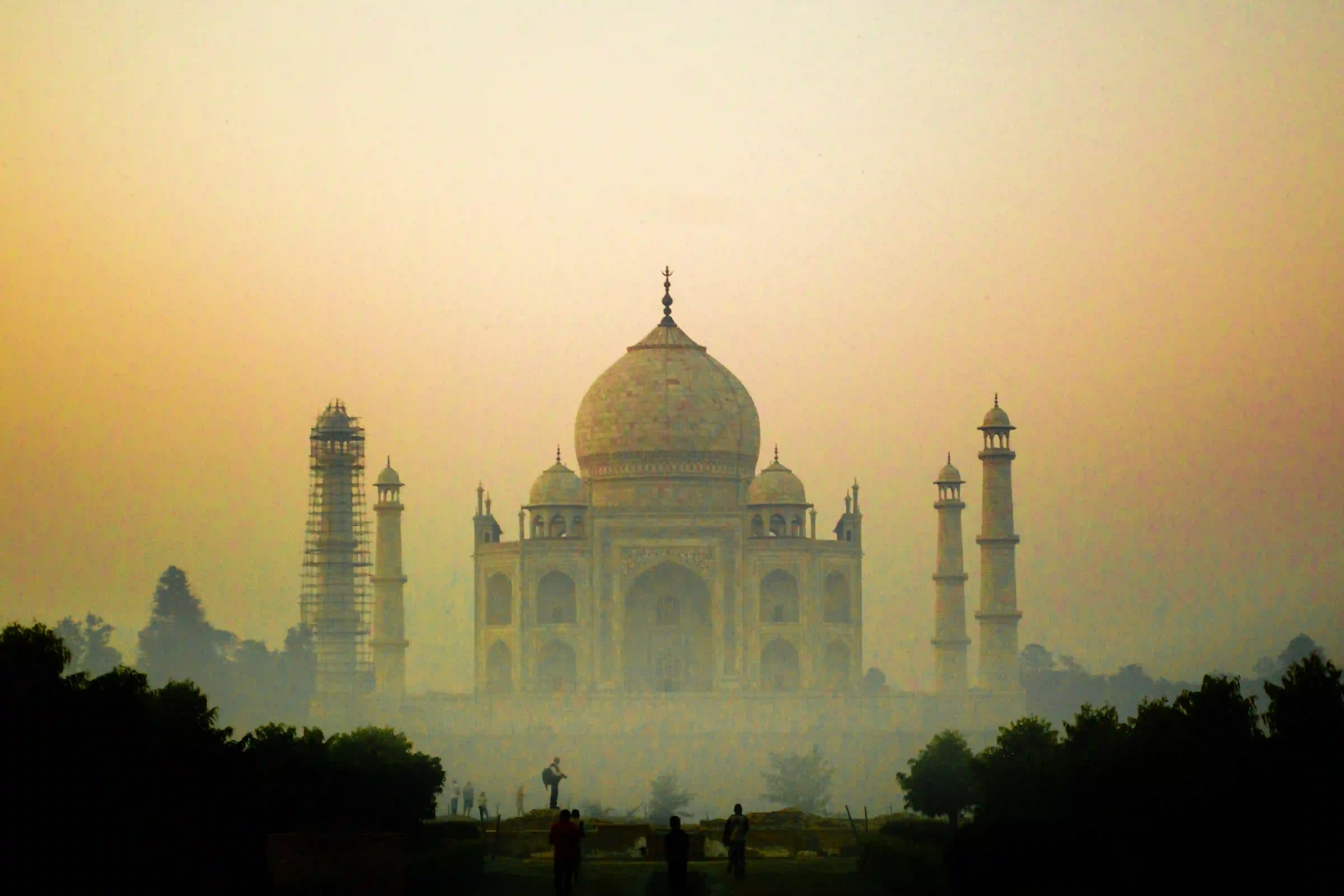
Visiting the Taj Mahal around sunrise offers a different atmosphere from a late-morning or afternoon visit. Early daylight gradually illuminates the white marble, creating subtle changes in the appearance of the monument as the sun rises. The gardens and reflecting pools can also look especially appealing in soft morning light, making the early visit popular among photographers.
Another advantage is the temperature. Agra can become very hot during the warmer months, and walking through a large monument complex under strong midday sunlight can be tiring. An early visit allows you to complete the main sightseeing before the day's heat becomes intense.
Morning visits can also feel calmer than the busiest periods of the day, although visitor numbers vary by season, holidays, weekends, and other factors. A sunrise visit does not guarantee an empty monument, so it is still important to arrive prepared for queues and security checks.
The early schedule is the main challenge. Travelers staying in Delhi must leave during the night or very early morning, depending on their transportation method. This makes a private car particularly attractive for visitors who want a door-to-door experience.
How Far Is Delhi from the Taj Mahal?
The road distance between Delhi and Agra is approximately 230 kilometres, although your exact distance will depend on your starting location in Delhi and the route used. The Yamuna Expressway provides a direct road connection between the two cities, and travel time can vary because of traffic, weather, road conditions, and breaks.
For a sunrise visit, you should not plan the journey using the average daytime travel time alone. You need to work backward from the expected sunrise and the Taj Mahal's visitor-entry arrangements. Your driver should understand that the objective is not simply to arrive in Agra early but to reach the appropriate visitor area with enough time for parking, transfers, security, and entrance procedures.
If you are staying in central Delhi, airport areas, or another part of the National Capital Region, your pickup time can vary considerably. Discuss the exact pickup location with your driver or tour operator before the night of travel.
What Time Should You Leave Delhi?
The departure time depends on the season and the exact sunrise time on your travel date. Sunrise changes throughout the year, so there is no single departure time that works for every month.
As a general planning principle, allow several hours for the journey and aim to reach Agra before the sunrise viewing period rather than arriving exactly at sunrise. This buffer gives you some protection against traffic, brief stops, and entrance procedures.
For many travelers, a private car pickup during the early hours of the morning is the most practical arrangement. If your target is sunrise, leaving Delhi around 2:00 or 3:00 AM may be appropriate depending on your starting point, road conditions, and the season. Confirm the exact schedule with your driver after checking the sunrise time and current monument-entry arrangements.
The goal is to arrive with enough time to enter comfortably, not to pull up at the gate at the last possible minute.
Private Car vs Train for Sunrise
A private car is generally the most flexible option for a sunrise-focused trip because you control the departure time. You can arrange a pickup from your hotel, travel directly to Agra, and have the vehicle available after sightseeing.
Train travel can also be useful for a Delhi-Agra day trip, but sunrise planning becomes more dependent on current train schedules. Not every early service will align with the exact sunrise period, and you will need local transportation from Agra's railway station to the Taj Mahal.
For couples, families, and small groups, a private car can simplify the logistics considerably. You can also stop briefly if necessary without worrying about missing a scheduled train.
When booking a private vehicle, confirm whether fuel, tolls, parking, driver charges, and applicable taxes are included. A clear quotation helps avoid unexpected costs at the end of the trip.
Check the Taj Mahal's Opening Arrangements
Before booking a Sunrise Taj Mahal Tour from Delhi, verify the current official opening arrangements for the Taj Mahal. The monument traditionally has a weekly closure on Fridays, and visitor procedures can change.
Do not rely exclusively on an old travel blog or social media post for current opening information. Ticket prices, entry procedures, security restrictions, and operating arrangements can change over time.
If your travel date is close to a major public holiday or special event, check for additional announcements. Your tour operator should also be able to explain the current visitor process.
This simple step can prevent one of the most frustrating travel experiences: completing a long overnight journey only to discover that your planned visit cannot proceed as expected.
What to Expect at the Taj Mahal at Sunrise
Once you enter the Taj Mahal complex, the first thing you may notice is the changing quality of the light. The white marble can appear different as the sky brightens, and the monument's symmetry becomes especially striking when viewed from the central approach.
The Taj Mahal complex contains much more than the central mausoleum. You will encounter monumental gateways, gardens, water channels, a mosque, a guesthouse, and intricate decorative elements.
The monument was commissioned by Mughal Emperor Shah Jahan in memory of Mumtaz Mahal. Construction began in the 17th century, and the complex became an important expression of Mughal architectural traditions.
Take your time to look at the marble inlay work and calligraphy rather than focusing exclusively on the famous front-facing photograph. A private guide can explain the historical and architectural details and help you understand why specific design elements were used.
Sunrise Photography Tips
A sunrise visit is particularly appealing to photographers because early light can create softer contrasts than harsh midday sunlight. The exact appearance of the monument depends on weather, season, cloud cover, and atmospheric conditions.
If photography is important to you, arrive early enough to find suitable viewpoints without rushing. A smartphone can produce excellent travel photographs, but a dedicated camera can provide additional control over exposure and composition.
Think beyond the standard frontal photograph. Include the reflecting pools, gardens, gateways, decorative details, and changing light in your compositions.
However, remember that photography rules inside the monument can vary by area. Follow the instructions of security personnel and monument authorities, particularly regarding where photography is permitted.
How Long Should You Spend at the Taj Mahal?
Most travelers should allow approximately two to three hours for a comfortable visit, although the ideal duration depends on your interests.
If you simply want to see the monument and take a few photographs, you may need less time. History enthusiasts, photographers, and travelers who want to explore the entire complex at a relaxed pace may want longer.
A sunrise visit can also take longer than expected because you may want to wait for the changing light. Avoid scheduling your next attraction immediately after your planned departure from the Taj Mahal.
A little flexibility is especially useful because entrance queues, security checks, and visitor numbers can vary.
Visit Agra Fort After Breakfast
After finishing your sunrise visit, you can have breakfast before continuing to Agra Fort. This creates a natural transition from the early-morning monument visit to the rest of your day.
Agra Fort is one of the city's most important historical attractions and provides a very different architectural experience from the Taj Mahal. Built primarily from red sandstone and expanded by successive Mughal rulers, the complex includes palaces, audience halls, courtyards, mosques, and defensive structures.
The fort also has historical connections to the Taj Mahal. From certain sections, visitors can see the Taj Mahal in the distance.
Allow approximately one to two hours for Agra Fort. If you are interested in Mughal history, you may want to spend longer with a guide explaining the different buildings and their functions.
Add Mehtab Bagh or Itmad-ud-Daulah
If your schedule allows after Agra Fort, consider adding one additional attraction. Mehtab Bagh is located across the Yamuna River and is associated with views of the Taj Mahal from the opposite side.
Itmad-ud-Daulah, often called the "Baby Taj," is another interesting option for travelers who enjoy Mughal architecture. Its intricate marble decoration makes it a worthwhile addition when time permits.
Don't feel obligated to visit both. A sunrise trip already requires an extremely early start, and you may be tired after several hours of sightseeing.
A sensible itinerary prioritizes quality over quantity. Seeing two or three attractions properly is generally more enjoyable than rushing through five.
Breakfast and Lunch in Agra
Because your day starts during the night, breakfast becomes particularly important. You can either carry a light snack for the journey, have breakfast after visiting the Taj Mahal, or arrange breakfast through your hotel if available.
After Agra Fort or your next attraction, take time for lunch. Agra offers local North Indian and Mughlai-inspired cuisine as well as restaurants serving familiar international dishes.
The city is also famous for petha, a traditional sweet that makes a convenient souvenir. If you want to purchase local food products, choose established shops and check packaging information.
Avoid experimenting excessively with unfamiliar food if you have a long drive back to Delhi. A comfortable return journey is an important part of a successful day trip.
Best Season for a Sunrise Trip
The cooler months are generally comfortable for walking around Agra's outdoor monuments. October through March is a popular period for sightseeing, although winter mornings can be cold and foggy.
Fog is particularly important for travelers planning a sunrise road trip. Reduced visibility can affect driving conditions and may make it difficult to maintain a precise arrival time. Allow additional travel time during periods when fog is possible.
Summer can be extremely hot, but sunrise visits have an advantage because you complete the Taj Mahal portion of the trip before the strongest afternoon heat.
The monsoon season can bring humidity and rainfall. A flexible itinerary and a weather check before departure can help you prepare.
What Should You Carry?
Keep your belongings minimal because you will be entering a monument with security restrictions. A small bag containing identification, phone, power bank, medication, water where permitted, tissues, sunglasses, and other essentials should be sufficient.
Wear comfortable walking shoes. The early morning may be cool, so a light jacket can be useful during winter. In summer, bring appropriate sun protection for later sightseeing.
Avoid carrying unnecessary large bags or restricted items. Monument security procedures can change, so check the latest official guidelines before your visit.
If you are traveling with children, carry their essential items and a few snacks for the early journey. A night departure can be difficult for younger travelers, so preparation makes a noticeable difference.
How Much Does a Sunrise Tour Cost?
The cost depends on your transportation method, vehicle category, number of travelers, guide services, monument tickets, season, and additional attractions.
Private car tours typically cost more than traveling independently by public transportation, but they provide convenience and flexibility. When comparing prices, look beyond the headline figure.
Ask whether the package includes fuel, tolls, parking, driver charges, guide fees, monument tickets, and taxes. Some low-cost packages may exclude several of these expenses.
If you are traveling as a small group, divide the total vehicle cost among the passengers to understand the per-person expense. A private car can become more economical per traveler when shared by several people.
Should You Hire a Private Guide?
A guide is not essential, but it can make the visit considerably more informative. The Taj Mahal contains architectural details that are easy to overlook when you are exploring without historical context.
A qualified guide can explain the monument's history, architectural design, marble inlay techniques, calligraphy, gardens, and connections to the Mughal dynasty.
If photography is your priority, tell the guide beforehand. You may prefer more time at particular viewpoints rather than a rapid historical tour.
Confirm whether the guide is included in your tour package and whether the person is authorized to provide guiding services at the monument.
A Sample Sunrise Itinerary
A practical itinerary might look like this:
- 2:00–3:00 AM: Pickup from your Delhi hotel, depending on the travel date and exact sunrise time.
- Early morning: Travel to Agra via the appropriate road route.
- Before sunrise: Arrive near the Taj Mahal and complete the necessary entry process.
- Sunrise–8:00 AM: Explore the Taj Mahal and enjoy morning photography.
- 8:00–9:00 AM: Breakfast.
- 9:30–11:00 AM: Explore Agra Fort.
- 11:30 AM–12:30 PM: Visit an optional attraction if desired.
- 12:30–1:30 PM: Lunch.
- Afternoon: Begin the return journey to Delhi.
- Evening: Arrive in Delhi, depending on traffic and road conditions.
These times are illustrative. Sunrise varies throughout the year, and actual monument-entry arrangements should be confirmed before travel.
Common Mistakes to Avoid
The biggest mistake is treating sunrise as simply an early version of a normal Agra tour. You are traveling through the night, so you need to plan for fatigue as well as sightseeing.
Another mistake is leaving Delhi without checking the sunrise time and current monument-opening arrangements. Your schedule should be built around the actual date of travel.
Don't schedule too many attractions. After traveling overnight, most people will appreciate a slower pace.
Another common mistake is failing to plan the return journey. If you have an evening flight, train, or important appointment in Delhi, allow a generous buffer.
Finally, confirm your vehicle and driver before the night of departure. A reliable driver is particularly important when your journey begins during the early morning hours.
Is a Sunrise Tour Better for Families and Couples?
A sunrise trip can work well for couples who enjoy photography and quiet sightseeing, but families should consider the very early departure. Young children may struggle with leaving a Delhi hotel during the middle of the night.
For families, a private car is particularly useful because you can control breaks and carry necessary items. You can also return to Delhi at your own pace.
Couples may enjoy the atmospheric morning setting and softer light. If photography is important, the early arrival gives you more opportunity to experiment with different compositions.
The right choice ultimately depends on your travel style, tolerance for an early start, and available time.
Why Choose a Private Sunrise Tour?
A Sunrise Taj Mahal Tour from Delhi is particularly well suited to travelers who want maximum flexibility. A private vehicle means you don't have to coordinate with a large group or depend entirely on a fixed timetable.
You can arrange the pickup around the sunrise time, choose your preferred sightseeing duration, visit Agra Fort afterward, and decide whether to add another attraction.
The experience is also easier to personalize. Families can take breaks, photographers can spend longer at viewpoints, and history enthusiasts can arrange a private guide.
The trade-off is that private transportation generally costs more than the cheapest public-transport options. For many travelers, however, the convenience is an important part of the experience.
Conclusion
A Sunrise Taj Mahal Tour from Delhi requires careful timing, but it can provide one of the most memorable ways to experience Agra. Start by checking the exact sunrise time and current Taj Mahal opening arrangements for your travel date. Then work backward to determine your Delhi pickup time, allowing plenty of room for traffic, road conditions, parking, security, and entrance procedures.
A private car is particularly convenient because it gives you control over the entire schedule. After visiting the Taj Mahal, you can have breakfast, explore Agra Fort, and add one additional attraction if you still have enough time and energy.
The most important rule is to keep the itinerary realistic. You are beginning your journey during the night, so there is no advantage in trying to visit every attraction in Agra. Focus on the Taj Mahal, enjoy the early light, explore Agra Fort, have a proper meal, and leave enough time for a comfortable return to Delhi.
With reliable transportation and thoughtful preparation, a sunrise visit can combine beautiful morning scenery, fascinating Mughal history, and a memorable day in Agra without requiring an overnight stay.
FAQs
What time should I leave Delhi for a sunrise Taj Mahal visit?
The departure time depends on your travel date, pickup location, road conditions, and the exact sunrise time. In many cases, travelers may need to leave Delhi around 2:00–3:00 AM to reach Agra before sunrise, but the precise schedule should be calculated for the specific date.
Can I visit Agra Fort after seeing the Taj Mahal at sunrise?
Yes. Agra Fort is an excellent second attraction and is relatively close to the Taj Mahal. After your morning visit and breakfast, you can spend approximately one to two hours exploring the fort.
Is a private car necessary for a sunrise tour?
No, but it is one of the most convenient options. A private car gives you control over your departure time and avoids the need to coordinate multiple forms of transportation during the early morning.
What should I wear for a sunrise visit?
Wear comfortable walking shoes and dress according to the season. Winter mornings can be cold, while summer mornings are generally more comfortable but still require sun protection later in the day.
Can I return to Delhi on the same day?
Yes. A sunrise visit leaves most of the day available for sightseeing before beginning the return journey. Allow several hours for the trip back and include a generous buffer for traffic and unexpected delays.