How to Plan a Taj Mahal Tour From Delhi?
August 15, 2026
How to Plan a Taj Mahal Tour From Delhi?
Planning a Taj Mahal Tour from Delhi is one of the most popular ways to experience one of India's most iconic monuments. The journey is relatively straightforward, and you can choose between a same-day trip, an overnight stay in Agra, or a longer itinerary that combines the Taj Mahal with other attractions. Your ideal plan depends on your available time, preferred transportation, budget, and whether you want a relaxed experience or a packed sightseeing day.
For most first-time visitors, an overnight trip offers the best balance. You can travel from Delhi to Agra in the morning, explore Agra Fort and other attractions, stay overnight, and visit the Taj Mahal at an appropriate opening time before continuing your journey. A same-day trip is also possible, especially if you use an efficient train or private car, but it requires careful timing. The key is to avoid treating the Taj Mahal as just a quick photo stop because the monument and its surrounding heritage deserve time and attention.
Quick Answer: How Long Do You Need for a Taj Mahal Tour From Delhi?
If your schedule is limited, you can visit the Taj Mahal from Delhi in one day. A typical same-day itinerary involves an early departure from Delhi, arrival in Agra, a visit to the Taj Mahal and Agra Fort, lunch, and a return to Delhi in the evening.
However, one night in Agra is generally more comfortable. It allows you to avoid a long round trip on the same day and gives you greater flexibility around sightseeing. You can also include attractions such as Mehtab Bagh, Itmad-ud-Daulah's Tomb, or Fatehpur Sikri depending on your itinerary.
| Trip Duration | Best For | Suggested Plan |
|---|---|---|
| 1 Day | Travelers with limited time | Delhi → Taj Mahal → Agra Fort → Delhi |
| 2 Days / 1 Night | Most first-time visitors | Delhi → Agra sightseeing → overnight → Taj Mahal → Delhi |
| 3 Days | History and photography enthusiasts | Delhi → Agra → Fatehpur Sikri/nearby heritage sites |
| 5–7 Days | Travelers wanting a broader experience | Delhi → Agra → Jaipur and other destinations |
Why Take a Taj Mahal Tour From Delhi?
Delhi is one of the most convenient starting points for visiting the Taj Mahal because of its transportation connections with Agra. The two cities are connected by highways and railway services, making the journey practical for both independent travelers and organized tours.
The trip also gives you an opportunity to see a completely different side of northern India. Delhi is a huge metropolitan city with ancient monuments, Mughal heritage, colonial architecture, markets, restaurants, and modern neighborhoods. Agra, by comparison, has a stronger connection with the Mughal period and is home to the Taj Mahal, Agra Fort, and several other historic sites.
The contrast is part of the appeal. You can begin your morning surrounded by the energy of India's capital and, a few hours later, stand in front of the white marble monument that has become a global symbol of love and architecture.
How Far Is the Taj Mahal From Delhi?
The Taj Mahal is located in Agra, Uttar Pradesh, roughly 200 kilometers from central Delhi by road, although the exact travel distance and duration depend on your starting point and route.
By road, the journey can take several hours depending on traffic and the transportation option you choose. High-speed rail can be considerably faster in suitable circumstances, which is why trains are popular with travelers making a same-day visit.
When planning your itinerary, don't calculate the journey solely according to the distance. Delhi traffic, hotel pickup times, railway station transfers, security procedures, meals, and local transportation can all affect the actual schedule.
A sensible itinerary leaves a buffer rather than assuming everything will happen precisely according to the timetable.
Best Ways to Travel From Delhi to Agra
There are three main options for getting from Delhi to Agra: private car, train, and organized tour.
Traveling by Private Car
A private car is one of the most flexible options. You can arrange hotel pickup in Delhi, travel directly to Agra, stop along the way if appropriate, and continue according to your own schedule.
This is particularly useful for families, couples, older travelers, and visitors who want door-to-door transportation. A private vehicle can also make it easier to combine the Taj Mahal with Agra Fort, Mehtab Bagh, or other attractions.
The downside is that road travel can be affected by traffic and other delays. For that reason, an early departure is usually preferable.
Traveling by Train
Train travel can be an efficient option for travelers who want to minimize road time. Several railway services connect Delhi and Agra, but schedules, operating days, journey times, and availability can change.
If you are planning a same-day visit, check the current train schedule before booking your sightseeing arrangements. Your return train should leave enough time after your planned visits to account for local traffic and station procedures.
Train travel can also be an interesting part of the experience because it allows you to observe a different aspect of everyday travel in India.
Joining an Organized Tour
An organized tour can simplify the entire process. Transportation, sightseeing, local assistance, and sometimes entrance arrangements are coordinated in advance.
This can be particularly useful if you have limited time in Delhi and don't want to manage every logistical detail yourself.
Before booking, check exactly what is included. Tour packages can differ considerably in terms of transportation, guide services, entrance fees, meals, and hotel accommodation.
Best Time to Visit the Taj Mahal
The best time for your visit depends on weather, crowd levels, photography preferences, and your broader India itinerary.
The cooler part of the year is generally popular because walking around the Taj Mahal and other historic sites is more comfortable. During hotter periods, early sightseeing can help you avoid the strongest afternoon heat.
For photographers, the quality of light can be particularly important. Early morning often creates a softer atmosphere and can provide beautiful conditions for architectural photography.
Whatever month you choose, check current visiting hours, closure days, weather conditions, and ticketing information before your trip because official arrangements can change.
What Is the Best Time of Day to Visit the Taj Mahal?
Early morning is often an excellent choice for a Taj Mahal visit. Temperatures may be more comfortable, and morning light can give the marble a soft appearance.
An early visit can also help you avoid some of the heavier crowds that may develop later in the day. However, visitor numbers vary according to season, holidays, weekends, and other factors.
The most important thing is to plan around the monument's current official opening arrangements. Avoid relying on an old itinerary or information from several years ago.
If you are staying overnight in Agra, an early visit becomes much easier because you don't have to make the entire journey from Delhi before entering the monument complex.
What to See at the Taj Mahal
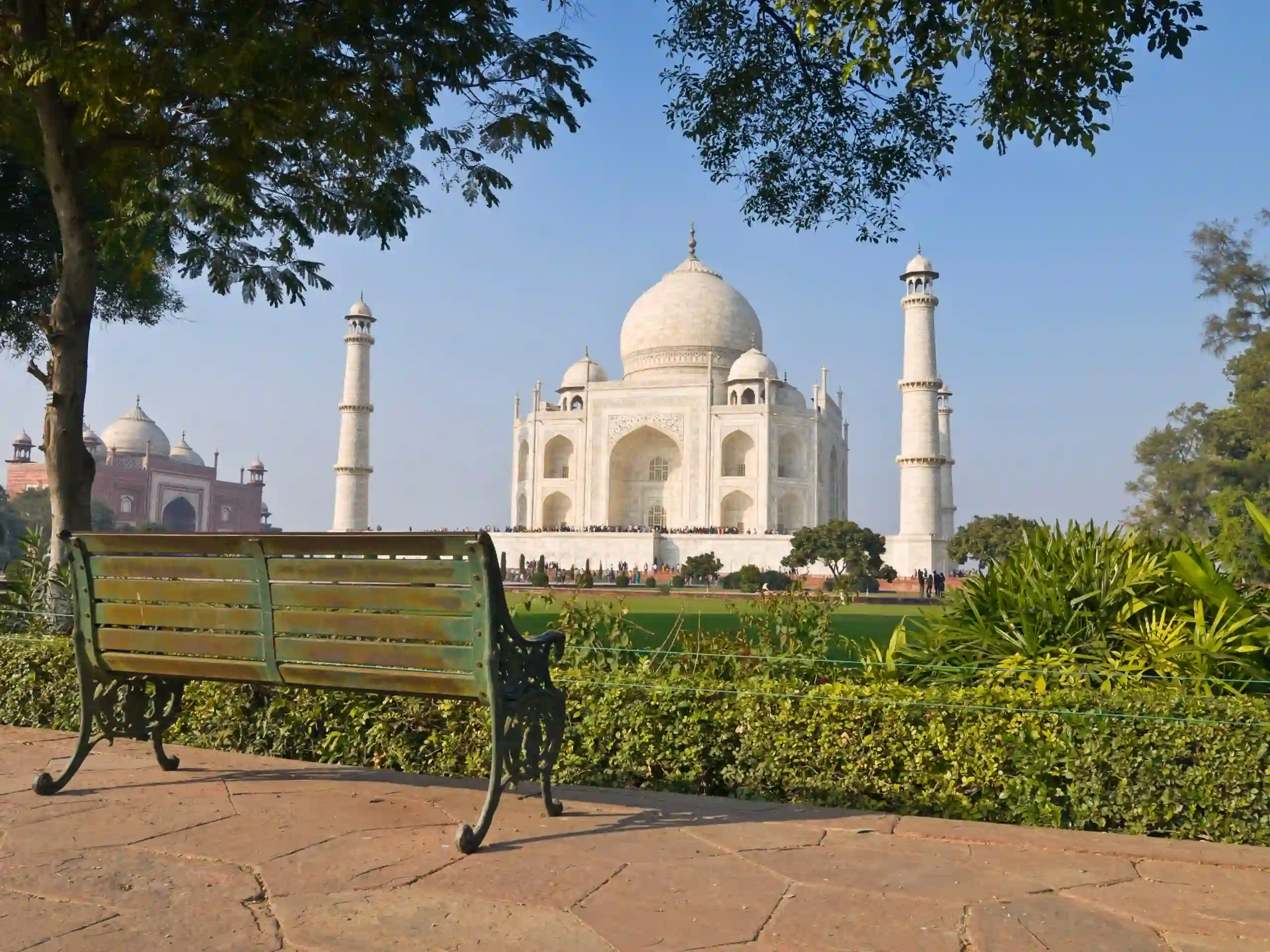
The Taj Mahal Tour experience is much more than seeing the central white marble mausoleum. The complex includes monumental gateways, gardens, a mosque, a corresponding building on the opposite side, and numerous architectural details.
Take time to observe the symmetry of the complex. The marble inlay work, calligraphy, domes, minarets, decorative motifs, and changing perspectives reveal details that can easily be missed if you rush through.
You should also allow time to walk through the gardens and appreciate how the monument was designed as an integrated architectural composition.
A good visit is not about how quickly you can reach the main viewing area. It is about giving yourself enough time to understand why the monument is architecturally significant.
What Else Should You See in Agra?
A visit to the Taj Mahal can easily be combined with several other attractions.
Agra Fort
Agra Fort is one of the most important places to visit after the Taj Mahal. The enormous red sandstone complex contains palaces, courtyards, halls, mosques, and defensive structures associated with the Mughal emperors.
The fort also provides historical context for the Taj Mahal. Visiting both sites helps you understand the Mughal dynasty and the architectural development of the period.
Mehtab Bagh
Located across the Yamuna River, Mehtab Bagh offers a different perspective toward the Taj Mahal.
The gardens can be particularly interesting for photographers who want to capture the monument from a less conventional viewpoint.
Itmad-ud-Daulah's Tomb
Often associated with the development of Mughal decorative architecture, Itmad-ud-Daulah's Tomb is another worthwhile stop if your schedule allows.
Its detailed marble work and smaller scale create a contrast with the monumental Taj Mahal.
Should You Stay Overnight in Agra?
For many travelers, yes.
An overnight stay turns a potentially exhausting day trip into a more relaxed experience. Instead of worrying about reaching Agra, seeing everything, and returning to Delhi before the end of the day, you can divide the sightseeing more naturally.
A typical overnight itinerary might look like this:
Day 1: Delhi → Agra → Agra Fort → Mehtab Bagh → overnight in Agra.
Day 2: Early Taj Mahal visit → breakfast → additional sightseeing → return to Delhi or continue to Jaipur.
This arrangement also works particularly well if you are continuing to Jaipur as part of India's Golden Triangle.
Can You Visit the Taj Mahal as a Day Trip From Delhi?
Yes, a same-day visit is possible and is popular among travelers with limited vacation time.
The biggest advantage is convenience: you don't need to change hotels or spend an additional night away from Delhi. The disadvantage is that the day can become quite long.
A same-day itinerary requires careful coordination of transportation and sightseeing. You should leave Delhi early, arrive in Agra with enough time for the Taj Mahal, visit another major attraction such as Agra Fort, and leave sufficient time for your return journey.
If you are traveling with young children, elderly family members, or anyone who prefers a relaxed pace, an overnight stay may be the better choice.
Sample One-Day Taj Mahal Itinerary From Delhi
A practical same-day structure could be:
Early morning: Depart Delhi.
Morning: Arrive in Agra and visit the Taj Mahal.
Late morning: Explore Agra Fort.
Lunch: Enjoy a meal at a suitable local restaurant.
Afternoon: Visit another attraction if time permits.
Late afternoon/evening: Return to Delhi.
This itinerary is intentionally selective. Trying to visit every possible attraction can make the day unnecessarily stressful.
The Taj Mahal and Agra Fort are the two major priorities for most first-time visitors. Everything else should be considered optional depending on your available time.
Sample Two-Day Taj Mahal Itinerary
A two-day itinerary gives you much more flexibility.
Day 1
Depart Delhi in the morning and travel to Agra. After checking into your hotel or storing your luggage, visit Agra Fort.
Spend the afternoon exploring the city or visiting another historical attraction. In the evening, consider visiting Mehtab Bagh or enjoying a relaxed dinner.
Day 2
Start early with the Taj Mahal. After exploring the monument, return to your hotel for breakfast and check out.
Depending on your onward plans, you can either return to Delhi or continue toward Jaipur.
This is one of the easiest ways to incorporate Agra into a larger northern India itinerary.
How to Combine the Taj Mahal With Jaipur
If you have more time, consider continuing from Agra to Jaipur instead of returning to Delhi.
This creates the classic Golden Triangle route:
Delhi → Agra → Jaipur
Delhi provides the capital's historical and cultural experiences. Agra introduces you to Mughal architecture and the Taj Mahal, while Jaipur adds Rajasthan's forts, palaces, markets, and royal heritage.
This route can be completed comfortably in approximately 6 to 8 days, depending on how much time you want in each destination.
For travelers interested in wildlife, you can also extend the journey to Ranthambore after Jaipur.
How Much Does a Taj Mahal Trip From Delhi Cost?
There is no single fixed price because the total cost depends on how you travel.
Your budget may include:
- Transportation between Delhi and Agra
- Taj Mahal entrance fees
- Agra Fort entrance fees
- Local guide services
- Meals
- Hotel accommodation
- Local transportation
- Parking or tolls if traveling by private car
Train travel can be economical, while private vehicles offer greater flexibility. Luxury private tours can cost significantly more because they may include premium hotels, private guides, and higher-end transportation.
When comparing tour packages, look beyond the headline price. Check whether entrance fees, guides, meals, hotel stays, and transportation are included.
What Should You Wear?
There is no complicated dress code for ordinary sightseeing, but comfortable and respectful clothing is sensible.
Choose lightweight clothing during warm weather and layers during cooler periods. Comfortable walking shoes are particularly important because you may spend several hours walking around historic complexes.
A hat, sunglasses, sunscreen, and drinking water can also be useful depending on the season.
Remember that India can experience significant seasonal differences, so pack according to the weather forecast for your travel dates rather than relying on generic packing lists.
Tips for a Comfortable Taj Mahal Visit
Arrive early when practical, especially during busy periods. Keep your itinerary realistic and don't assume that you can visit multiple distant attractions in very short periods.
Use a licensed or reputable guide if you want detailed historical information. A knowledgeable guide can explain architectural details and historical stories that you might otherwise miss.
Keep your valuables secure and follow the current security rules at the monument. Entry procedures and restrictions can change, so check official information before your visit.
Most importantly, don't rush. The Taj Mahal is one of those places where taking an extra few minutes to look carefully can make the experience considerably better.
Common Mistakes to Avoid
One of the biggest mistakes is trying to visit the Taj Mahal, Agra Fort, Fatehpur Sikri, and several other attractions during a single short day from Delhi. It may look efficient on paper, but traffic and sightseeing time can quickly make the schedule exhausting.
Another mistake is failing to check the monument's current opening arrangements before traveling. Always confirm the latest official information close to your visit.
Travelers also sometimes forget to consider their return journey. If you have a flight from Delhi later that evening, don't create a schedule that leaves you with no buffer.
Finally, avoid judging the experience solely by how many attractions you manage to see. One memorable visit to the Taj Mahal is better than five rushed stops that leave you exhausted.
Is a Guided Taj Mahal Tour Worth It?
For travelers interested in history and architecture, a knowledgeable guide can add substantial value.
The Taj Mahal contains symbolism, architectural techniques, historical connections, and design features that aren't always obvious to first-time visitors. A guide can also help explain the relationship between the Taj Mahal and the wider Mughal history of Agra.
However, independent travelers can certainly visit without a guide. The decision depends on how much historical interpretation you want and how comfortable you are organizing the logistics yourself.
Final Planning Recommendation
If you have only one day, prioritize the Taj Mahal and Agra Fort. Leave Delhi early and organize your transportation carefully.
If you have two days, stay overnight in Agra. This is the option recommended for travelers who want a more comfortable experience.
If you have a week, combine Delhi, Agra, and Jaipur to create a classic Golden Triangle itinerary.
If you have more than a week, consider adding Ranthambore or another Rajasthan destination rather than simply packing more attractions into the existing schedule.
Conclusion
A well-planned Taj Mahal Tour from Delhi doesn't need to be complicated. The most important decisions are how much time you have, whether you prefer a private car or train, and whether you want to make the journey in one day or stay overnight in Agra.
For travelers with limited time, a same-day trip can successfully cover the Taj Mahal and Agra Fort. For a more comfortable experience, one night in Agra is worth considering. If you're planning a broader India adventure, connecting Delhi, Agra, and Jaipur creates a natural itinerary that showcases some of northern India's most remarkable historical and cultural destinations.
The Taj Mahal deserves more than a rushed photograph. Give yourself time to walk through the gardens, study the marble details, understand its history, and appreciate the monument from different perspectives. With sensible transportation, realistic timings, and a little flexibility, your journey from Delhi to Agra can become one of the highlights of your India trip.
FAQs
1. Can I visit the Taj Mahal from Delhi in one day?
Yes. A same-day trip is possible using a suitable train, private car, or organized tour. Start early and prioritize the Taj Mahal and Agra Fort.
2. Is one night in Agra necessary?
It isn't necessary, but it is recommended for a more relaxed trip. An overnight stay gives you greater flexibility and reduces the pressure of completing a long round trip in one day.
3. What is the best way to travel from Delhi to Agra?
Both trains and private cars can work well. Trains can be efficient, while private cars provide door-to-door convenience and greater flexibility for visiting additional attractions.
4. How much time should I spend at the Taj Mahal?
Allow several hours for a comfortable visit, including security procedures, walking through the complex, photography, and appreciating the architecture. Avoid scheduling another distant attraction immediately afterward.
5. Can I combine the Taj Mahal with Jaipur?
Yes. Delhi → Agra → Jaipur is the classic Golden Triangle route. If you have approximately six to eight days, you can comfortably combine these three destinations and experience a broader selection of India's history and culture.