What Are the Best Places to Visit in Rajasthan on a Tour?
August 22, 2026
What Are the Best Places to Visit in Rajasthan on a Tour?
Rajasthan is one of those destinations where every journey feels like opening another chapter of a grand historical story. One moment you can be standing beside a magnificent palace, and a few hours later you can be watching the sunset over golden desert dunes. The state combines royal architecture, colorful markets, ancient temples, wildlife, lakes, traditional cuisine, folk music, and desert landscapes in a way that few destinations can match. Rajasthan Tourism currently highlights destinations ranging from Jaipur, Udaipur, Jodhpur and Jaisalmer to Pushkar, Bikaner, Bundi, Chittorgarh, Mount Abu, Alwar and Ranthambore, showing just how diverse the state is for travelers.
If you are wondering which destinations deserve priority, the answer depends on the kind of experience you want. Jaipur is ideal for first-time visitors who want forts, palaces and shopping, while Udaipur is perfect for lakes and romantic scenery. Jodhpur brings imposing fort architecture and its famous blue-painted neighborhoods, whereas Jaisalmer introduces travelers to the Thar Desert and one of India's most remarkable living forts. Pushkar offers spirituality and a relaxed atmosphere, while Ranthambore adds wildlife and adventure to the experience. A well-planned Rajasthan Tour can therefore feel less like a simple sightseeing holiday and more like a journey through several different worlds within one state.
Jaipur – The Royal Gateway to Rajasthan
Jaipur is usually the natural starting point for travelers exploring Rajasthan because it combines history, architecture, shopping, food and modern conveniences in one lively destination. Known as the Pink City, Jaipur was established in 1727 by Maharaja Sawai Jai Singh II and remains one of the state's most recognizable cultural centers. The city's streets can feel energetic and chaotic, but behind that activity are some extraordinary monuments that tell the story of Rajasthan's royal past. Rajasthan Tourism describes Jaipur as the state's bustling capital while emphasizing that it still retains its historic charm.
The Amber Fort, City Palace, Hawa Mahal, Jantar Mantar and Nahargarh Fort are among the major attractions to include in your itinerary. Amber Fort is particularly impressive because of its hilltop setting, courtyards, gateways and detailed decorative work. Hawa Mahal is another essential stop, especially for photographers who want to capture the distinctive honeycomb-like façade. The City Palace offers a closer look at royal architecture, while Jantar Mantar demonstrates the scientific sophistication of the period. After sightseeing, Jaipur's markets are excellent for browsing textiles, jewelry, handicrafts, blue pottery and traditional clothing, while local dishes such as dal baati churma and kachori make the city equally attractive to food lovers.
Udaipur – The City of Lakes
Udaipur offers a completely different atmosphere from Jaipur. Instead of bustling bazaars and massive hill forts dominating the experience, Udaipur is characterized by lakes, palaces, gardens and romantic views. Rajasthan Tourism calls it the “Venice of the East” and highlights its lake palaces and architectural heritage. For couples, photographers and travelers who prefer a slower pace, Udaipur can easily become one of the most memorable stops on a Rajasthan Tour.
Lake Pichola is at the heart of the experience, with boat rides providing beautiful views of the surrounding palaces and cityscape. The City Palace is another major attraction, combining courtyards, balconies, museums and royal interiors overlooking the lake. Travelers can also explore Jagdish Temple, Bagore Ki Haveli and the scenic Monsoon Palace. One of the pleasures of Udaipur is simply walking through its old streets, finding rooftop viewpoints and watching the changing light over the water. The city also works well as a base for exploring nearby destinations, and Rajasthan Tourism notes its road and rail connections with places including Chittorgarh, Ahmedabad, Jaipur, Ajmer, Delhi and other major cities.
Jodhpur – Discover the Blue City
Jodhpur is another destination that should be high on your list, particularly if you are fascinated by forts and traditional cityscapes. Often called the Blue City, Jodhpur is dominated by the spectacular Mehrangarh Fort, which rises dramatically above the surrounding neighborhoods. Rajasthan Tourism describes Jodhpur as a blend of modern and traditional life and identifies it as Rajasthan's second-largest city after Jaipur.
Mehrangarh Fort deserves several hours because there is much more to see than the exterior walls. Inside are courtyards, galleries, palaces and collections connected with the region's royal history. From the fort's elevated position, you can see the densely packed blue-painted houses stretching across the city. Jaswant Thada, a beautiful marble memorial, provides a quieter contrast, while Umaid Bhawan Palace introduces another chapter of Jodhpur's royal heritage. Later in the day, exploring the markets around the old city can be just as enjoyable as visiting monuments. Try local snacks, look for handicrafts and take time to experience the atmosphere rather than rushing from one attraction to another.
Jaisalmer – The Golden City of the Thar Desert
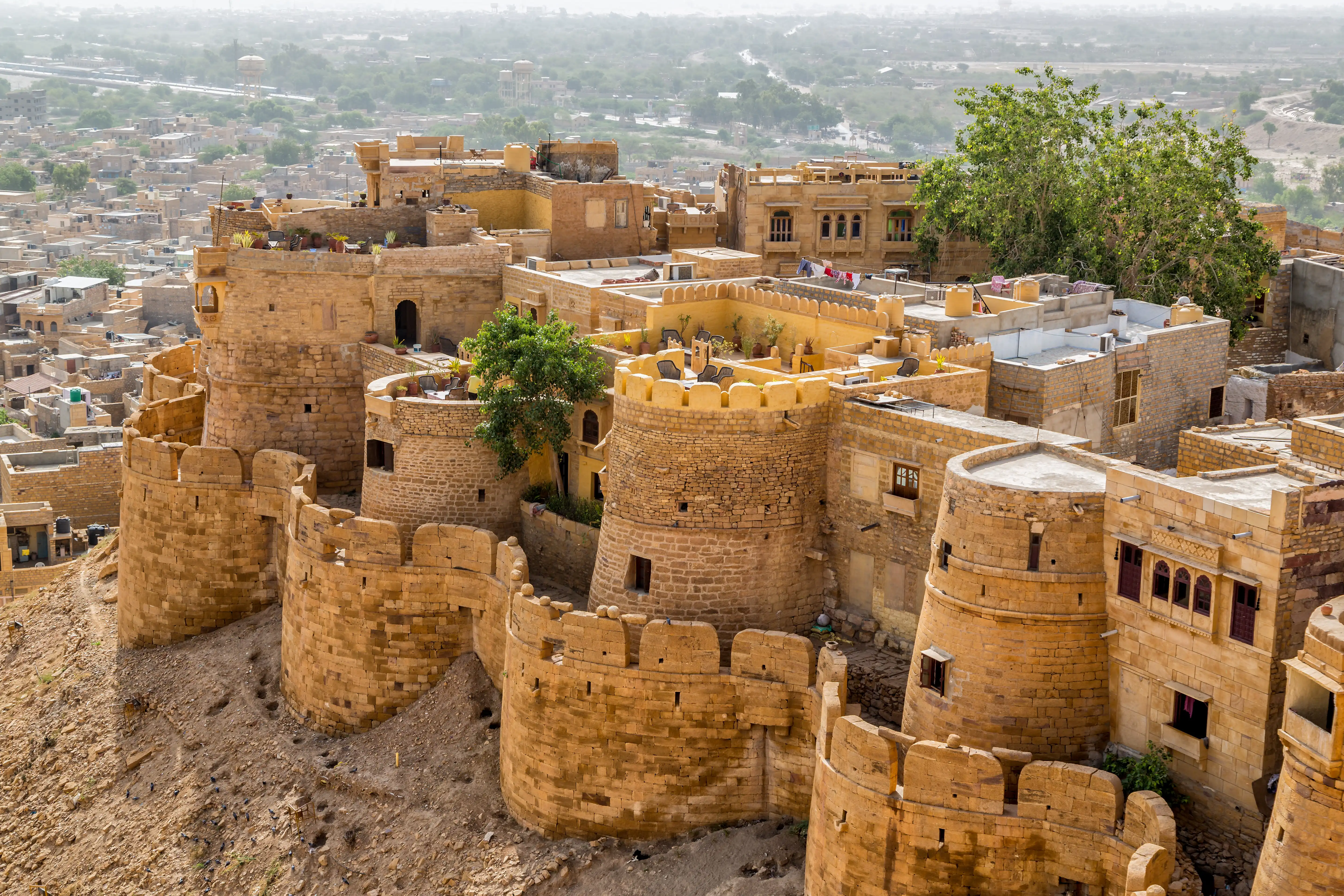
If your idea of Rajasthan includes golden sand, camel rides and desert sunsets, Jaisalmer should be near the top of your list. Located close to the Thar Desert, Jaisalmer is famous for its yellow sandstone architecture and magnificent Jaisalmer Fort. Rajasthan Tourism describes it as the “Golden City” and highlights Jaisalmer Fort as one of India's famous living forts.
The experience here is different from Rajasthan's major inland cities. Inside Jaisalmer Fort, you will find homes, shops, temples, restaurants and narrow lanes, creating a remarkable example of a historic settlement that continues to function as a living community. Patwon Ki Haveli and Salim Singh Ki Haveli are also worth visiting for their elaborate sandstone craftsmanship. For a memorable evening, head toward the desert areas around Sam for a camel safari or jeep excursion and watch the sun disappear across the dunes. Spending a night at a desert camp can add folk music, traditional food and cultural performances to the experience. Jaisalmer also has direct air connectivity from several Indian cities and road and rail connections with major destinations such as Jodhpur and Jaipur.
Pushkar – A Spiritual and Cultural Escape
Pushkar is smaller and calmer than Jaipur, Jodhpur or Jaisalmer, making it an excellent addition for travelers who want a spiritual and cultural side of Rajasthan. The town sits around the sacred Pushkar Lake and is recognized by Rajasthan Tourism as one of the state's important pilgrimage destinations.
The Brahma Temple is the most famous religious attraction, while the ghats surrounding Pushkar Lake provide an atmospheric place to observe local traditions and daily life. The town's narrow streets are filled with cafés, handicraft shops, textiles and small restaurants, creating a distinctly different environment from Rajasthan's royal cities. Pushkar is also famous for its annual camel and livestock fair, which attracts visitors interested in traditional rural culture. Even outside festival periods, however, the town can be worthwhile because its relaxed pace gives you time to explore without feeling that you need to follow a packed sightseeing schedule.
Ranthambore – The Best Choice for Wildlife Lovers
Rajasthan is not only about palaces and forts. Ranthambore adds a completely different dimension to the state with its wildlife, forests and historic fort. Sawai Madhopur serves as the gateway to Ranthambore, and Rajasthan Tourism specifically identifies the city as the gateway to the destination.
A safari through Ranthambore National Park is the main attraction, particularly for travelers hoping to see Bengal tigers in their natural environment. Wildlife sightings can never be guaranteed, which is part of what makes a safari exciting. You may spend hours moving through forest landscapes, watching birds, deer and other wildlife before suddenly encountering something extraordinary. Ranthambore Fort adds a historical element to the trip and is located above the surrounding landscape. Rajasthan Tourism states that the fort was built by the Chauhan rulers and includes temples, tanks, large gates and massive defensive walls. A Rajasthan Tour that includes Ranthambore is particularly appealing to families, photographers and adventure travelers who want more variety than conventional sightseeing.
Bikaner – A Taste of Desert Heritage
Bikaner is an excellent destination for travelers who want to experience another side of desert Rajasthan. Known for its association with camel culture, Bikaner has an impressive heritage atmosphere without feeling exactly like Jaisalmer. Rajasthan Tourism describes Bikaner as “camel country” and highlights its traditional camel heritage.
Junagarh Fort is the centerpiece of the city and is notable for its ornate interiors, courtyards and defensive architecture. The old city also offers opportunities to explore colorful markets and traditional food. Bikaner's famous snacks are particularly popular, so food enthusiasts should leave room in their itinerary for local specialties. The city can also be paired with Jaisalmer or Jaipur depending on the length of your journey. If you have extra time beyond the classic Jaipur-Jodhpur-Jaisalmer route, Bikaner can provide a rewarding extension.
Chittorgarh – Explore Rajasthan's Legendary Fort
For travelers interested primarily in history, Chittorgarh deserves serious consideration. The city is dominated by Chittorgarh Fort, one of Rajasthan's most significant historical landmarks. Rajasthan Tourism describes Chittorgarh as a place that represents Rajput spirit, valor, pride and romance.
The fort complex is enormous, so allow enough time rather than treating it as a quick photo stop. Its towers, palaces, temples, gates and ruins help explain the turbulent history of the Rajput kingdoms. Vijay Stambh and Kirti Stambh are among the best-known structures within the complex. Chittorgarh works especially well as part of an itinerary connecting Jaipur, Pushkar and Udaipur. History lovers may find that the destination provides a deeper understanding of Rajasthan than simply visiting its more polished royal palaces.
Mount Abu – Rajasthan's Hill Station
Mount Abu is an unexpected addition to a Rajasthan itinerary because it offers a cooler hill-station environment surrounded by the Aravalli landscape. Rajasthan Tourism identifies Mount Abu as Rajasthan's hill station and describes it as a source of relief from the state's hot desert climate.
The destination is especially attractive if you want a break from long drives through dry landscapes. Nakki Lake, viewpoints, forests and the famous Dilwara Jain Temples are among the highlights. The marble craftsmanship of the Dilwara temples is particularly impressive for visitors interested in architecture and religious art. Mount Abu is located in southern Rajasthan, so it is not always included in a short first-time itinerary, but travelers with more days can use it to create a more varied journey combining heritage, nature and relaxation.
Bundi – A Quiet Alternative for Slow Travelers
Bundi is one of the places to consider when you want to move away from Rajasthan's busiest tourist circuits. Rajasthan Tourism describes it as a town of stepwells, palaces and forts with a fairy-tale quality. Its compact atmosphere allows travelers to slow down and appreciate details that can easily be missed in larger cities.
Bundi Palace and Taragarh Fort are the major attractions, while the town's historic stepwells and painted interiors provide plenty of visual interest. The city is particularly appealing to photographers, history enthusiasts and travelers who prefer authentic-feeling streets over heavily commercialized tourist areas. It may not be the first place recommended for someone visiting Rajasthan for only four or five days, but with additional time it can be an excellent addition.
Which Rajasthan Destinations Should You Choose?
Choosing destinations depends on how many days you have and what you want to experience. A short holiday should focus on a manageable group of destinations rather than trying to cover the entire state. Rajasthan Tourism itself lists numerous circuits and packages, including a 6-night/7-day “Pearls of Rajasthan,” an 8-night/9-day “Best of Rajasthan Part 1,” and longer Rajasthan and desert itineraries.
| Travel Duration | Recommended Destinations | Best For |
|---|---|---|
| 3–4 days | Jaipur + Pushkar | First-time visitors and short breaks |
| 5–6 days | Jaipur + Jodhpur + Udaipur | Forts, palaces and culture |
| 7–8 days | Jaipur + Jodhpur + Udaipur + Pushkar | Classic Rajasthan experience |
| 8–10 days | Jaipur + Ranthambore + Jodhpur + Udaipur | Heritage and wildlife |
| 10–12 days | Jaipur + Pushkar + Jodhpur + Jaisalmer + Udaipur | Desert and royal Rajasthan |
| 12+ days | Add Bikaner, Chittorgarh, Bundi or Mount Abu | Deeper exploration |
Best Time to Explore Rajasthan
The ideal season depends on the destinations you want to visit, but the cooler months are generally more comfortable for extensive sightseeing. Rajasthan Tourism notes that the state combines the Aravalli ranges with the Thar Desert and offers a broad range of landscapes and attractions. Winter is particularly attractive for travelers planning long days outdoors because fort visits, walking tours and desert excursions are easier to enjoy in pleasant conditions.
The warmer months can be challenging in many parts of Rajasthan, particularly during the hottest periods. Monsoon can bring a different character to places such as Udaipur, where lakes and surrounding landscapes can look especially appealing. Rajasthan Tourism also emphasizes that destinations including Udaipur, Jaipur, Jodhpur and Jaisalmer offer different experiences throughout the state, so seasonal planning should consider your complete route rather than relying on a single city.
How to Plan a Rajasthan Tour
The most important planning decision is to avoid trying to see everything at once. Rajasthan is large, and long road journeys between destinations can consume a significant part of your holiday. Instead, group destinations geographically and leave enough time for sightseeing. For example, Jaipur can be combined with Pushkar and Ranthambore, while Jodhpur can lead naturally toward Jaisalmer. Udaipur can then form the southern part of a longer itinerary.
Accommodation should also match the experience you want. Jaipur and Udaipur offer everything from budget hotels to heritage properties, while Jaisalmer gives you the option of staying inside or near the fort as well as spending a night in a desert camp. Transportation can include trains, private cars, buses and flights depending on the route. Rajasthan Tourism confirms that major destinations such as Udaipur and Jaisalmer have road and rail connections with several important Indian cities, making multi-city travel practical when planned carefully. A carefully organized Rajasthan Tour can help travelers experience these destinations without making the itinerary unnecessarily rushed.
Conclusion
Rajasthan is difficult to summarize with a single destination because its real attraction lies in the contrast between places. Jaipur introduces you to royal architecture and colorful markets, Udaipur offers lakes and romantic palace views, Jodhpur brings dramatic fort scenery, and Jaisalmer opens the door to the Thar Desert. Pushkar adds spirituality, Ranthambore adds wildlife, Bikaner brings desert heritage, Chittorgarh delivers powerful history, and Mount Abu provides a refreshing hill-station experience.
For a first visit, Jaipur, Jodhpur, Udaipur and Jaisalmer make an excellent foundation. If you have more time, adding Ranthambore, Pushkar, Bikaner or Chittorgarh can make your journey considerably richer. The best Rajasthan Tour is not necessarily the one with the largest number of destinations; it is the one that gives you enough time to actually experience each place.
Frequently Asked Questions
1. What are the best places to visit in Rajasthan for first-time travelers?
Jaipur, Jodhpur, Udaipur and Jaisalmer are among the strongest choices for first-time visitors because together they cover forts, palaces, lakes, markets and desert experiences. Pushkar can also be added if you have extra time.
2. How many days are enough for a Rajasthan tour?
Around 7 to 10 days can provide a good introduction to Rajasthan. A shorter trip can focus on Jaipur, while a longer itinerary can include Jodhpur, Udaipur, Jaisalmer, Ranthambore or Pushkar.
3. Is Jaisalmer worth visiting on a Rajasthan trip?
Yes, particularly if you want to experience the Thar Desert, visit Jaisalmer Fort and enjoy a desert safari. It adds a completely different landscape to the traditional fort-and-palace route.
4. Which Rajasthan destination is best for couples?
Udaipur is one of the most popular choices for couples because of its lakes, palace views, boat rides and romantic atmosphere. Jaisalmer can also be excellent for couples who want a desert experience.
5. Can I include Ranthambore in a Rajasthan itinerary?
Yes. Ranthambore works particularly well between Jaipur and destinations farther south or west, depending on your route. It is a strong choice for travelers who want to combine Rajasthan's historic attractions with a wildlife safari.