Why Does the Taj Mahal Change Color? The Science, History & Best Viewing Times
August 8, 2026
Why Does the Taj Mahal Change Color? The Science, History & Best Viewing Times
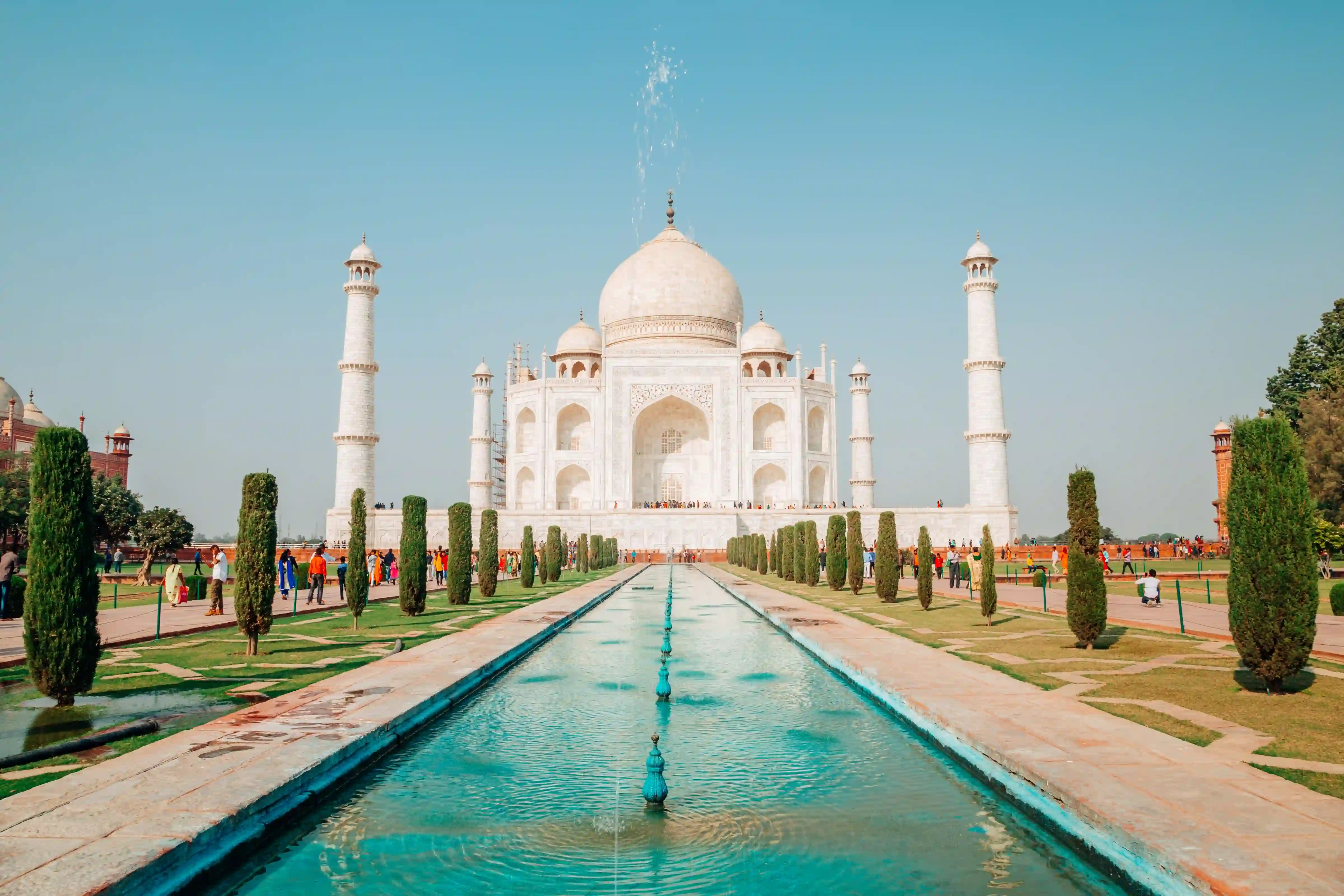
The Taj Mahal is one of the world's most recognizable monuments, but there is something about it that continues to surprise even people who have seen hundreds of photographs of it. Its brilliant white marble does not always appear exactly the same color. Depending on the time of day, weather, season, atmospheric conditions, and viewing angle, the monument can look bright white, soft ivory, pale pink, golden, gray, or even slightly blue. This visual transformation is one of the reasons photographs of the Taj Mahal can look dramatically different from one another.
So, does the marble actually change color? Not in the way a painted surface would. The stone is not suddenly turning pink at sunrise or becoming blue at night. Instead, the appearance results from the way natural light interacts with the marble, combined with atmospheric conditions and the colors surrounding the monument.
Understanding why the Taj Mahal Change Color phenomenon occurs requires looking at several factors together. The Taj Mahal's white Makrana marble has a particular ability to reflect light, while the sky, sunlight, humidity, dust, clouds, and surrounding landscape influence what our eyes perceive. Even the position of the viewer can alter the visual effect.
The monument's changing appearance isn't merely a photographic trick. It is a beautiful example of optics, architecture, atmosphere, and human perception working together.
What Makes the Taj Mahal Look White?
Before understanding why the Taj Mahal appears to change color, it helps to understand the material from which much of the monument is constructed. The main structure is covered with white Makrana marble, a natural stone quarried in Rajasthan. The marble has been valued for centuries because of its durability, strength, and distinctive appearance.
Marble is not simply a blank white surface. Its crystalline structure interacts with incoming light in complex ways. When sunlight reaches the stone, some light is reflected from the surface while some penetrates slightly into the material before being scattered back toward the observer.
That interaction helps create the soft, luminous appearance associated with the Taj Mahal.
The monument also contains intricate decorative details, including carved marble, inlay work, calligraphy, and semi-precious stones. These details influence how different areas of the building reflect light.
When the sun is high and relatively direct, the marble can appear intensely bright. When the light becomes softer, especially around sunrise and sunset, the same surface may take on warmer or cooler tones.
Why Does the Taj Mahal Change Color?
The phrase Taj Mahal Change Color is often used to describe the monument's different appearances throughout the day. The primary explanation is the changing quality and direction of sunlight.
Sunlight is not visually identical throughout the day. When the sun is low near the horizon, its light travels through more of Earth's atmosphere before reaching the monument. Atmospheric scattering removes or redirects some wavelengths more strongly than others, producing the warm colors associated with sunrise and sunset.
That means the marble reflects light that has already been altered by the atmosphere.
At sunrise, warm sunlight can make the Taj Mahal appear pale pink, peach, or golden. As the sun rises higher, the illumination becomes stronger and more neutral, and the marble can look brilliant white.
Later in the afternoon, changing sunlight angles and atmospheric conditions can produce subtle cream or ivory tones. Around sunset, warmer light can return, sometimes giving the monument a golden or orange appearance.
After dark, artificial lighting and the surrounding sky create an entirely different visual environment.
The Science Behind the Color Changes
The science is largely about light scattering, reflection, and perception.
Sunlight contains a broad range of visible wavelengths. As sunlight travels through the atmosphere, tiny molecules and particles scatter portions of that light. Shorter wavelengths, particularly blue light, are scattered more strongly under many atmospheric conditions. This phenomenon contributes to the blue appearance of the daytime sky.
Near sunrise and sunset, however, sunlight travels through a longer atmospheric path. More of the shorter-wavelength light is scattered away from the direct beam, allowing relatively more red, orange, and yellow light to reach surfaces.
When that warm light falls on white marble, the marble reflects it toward observers. The result can be a warmer-looking Taj Mahal.
This doesn't mean the stone itself has permanently become pink or gold. The illumination has changed.
Human vision also plays an important role. Our brains continuously adjust how we perceive colors according to surrounding illumination. A white object under warm light can still be perceived as white, but photographs and direct visual observation can emphasize the warmer tones.
Does the Taj Mahal Really Turn Pink?
The Taj Mahal can appear pinkish under certain lighting conditions, particularly around sunrise. However, describing this as the marble literally turning pink is misleading.
The color is primarily an optical effect created by illumination and atmospheric conditions.
Early morning light tends to have warmer tones, and the low angle of the sun produces long shadows across the architectural details. These shadows can make decorative elements and carved surfaces appear more pronounced.
The surrounding sky can also influence perception. A pale pink or orange sky reflected in parts of the marble can enhance the impression that the monument itself is changing color.
Photography can intensify the effect even further. Camera sensors, exposure settings, white balance, lenses, and image processing can all affect how the final photograph represents the Taj Mahal.
This explains why two photographs taken only minutes apart can sometimes look surprisingly different.
How the Taj Mahal Looks at Sunrise
Sunrise is one of the most popular times to see the Taj Mahal, and there is a good reason for that.
The first sunlight is softer than the intense illumination found around midday. When warm rays reach the white marble, the building can appear pale pink, rose-colored, or softly golden.
The low angle of the sunlight also creates more visible contrast between illuminated surfaces and shaded areas. Architectural details that might appear relatively flat under harsh midday light can become more dramatic.
For photographers, this is particularly valuable.
Early morning can also offer a calmer atmosphere compared with the busiest periods of the day, although visitor levels vary by season, day, and current access conditions.
If your goal is photography, arriving early gives you the opportunity to capture multiple stages of the changing light rather than relying on one exact moment.
The Taj Mahal in Bright Daylight
As the sun climbs higher, the warm colors of early morning gradually give way to stronger, more neutral illumination.
At this point, the Taj Mahal can appear exceptionally white. Under clear skies, the marble may look almost luminous against the blue background.
This is the appearance most commonly associated with classic daytime photographs of the monument.
Midday light can produce very sharp contrasts, though. Strong sunlight can create dark shadows beneath architectural projections and reduce some of the subtlety visible during softer morning or evening illumination.
For visitors who prioritize seeing architectural details clearly rather than capturing atmospheric photographs, daytime can still be an excellent option.
The gardens, reflecting pool, domes, minarets, and marble surfaces can all be viewed under strong natural illumination.
What Happens at Sunset?
Sunset produces another fascinating transformation.
As the sun drops toward the horizon, the light becomes warmer. The marble can take on creamy, yellow, orange, or golden tones depending on the conditions.
Clouds can make the effect even more dramatic. If sunlight passes beneath or between clouds, the Taj Mahal may receive brief bursts of warm illumination while surrounding areas remain in shadow.
This can create a striking contrast between the monument and the sky.
Sunset is particularly attractive for photographers because the warmer light can add depth and atmosphere to an otherwise bright architectural subject.
The exact appearance is never guaranteed. Weather, haze, humidity, dust, cloud cover, and the position of the sun all influence what you'll see.
Why Does the Taj Mahal Sometimes Look Blue?
One of the more unusual visual effects occurs under cooler light conditions.
At certain times, especially around dawn, dusk, or under a blue-toned sky, the marble may appear slightly bluish or gray.
The sky itself is an important factor. White marble reflects surrounding light, so a blue sky can influence the color perceived on the stone.
After sunset, the balance changes again. As natural sunlight disappears, the remaining ambient light becomes cooler. The marble can consequently appear gray, silver, or blue.
This effect is especially noticeable in photographs where the contrast between the monument and the sky is emphasized.
Again, the stone has not changed its physical composition. The apparent color comes from the interaction between the marble, available light, atmosphere, and the observer.
Does Pollution Affect the Taj Mahal's Color?
Yes, atmospheric pollution can affect how the Taj Mahal looks.
The monument's location near Agra means it is exposed to airborne particles and pollutants that can settle on or interact with the marble surface. Environmental pollution has long been a concern for the preservation of the monument.
Dust and particulate matter can reduce the brilliance of the marble and contribute to a yellowish or dull appearance if deposits accumulate.
This is different from the normal optical color changes caused by sunlight.
Conservation efforts therefore focus not only on protecting the structure from physical deterioration but also on preserving the appearance of the marble.
Visitors may notice that the Taj Mahal does not always look perfectly white in every photograph. Atmospheric haze, dust, humidity, and environmental conditions can all influence its appearance.
Why Is Makrana Marble Important?
The choice of marble was not accidental.
Makrana marble, sourced from Rajasthan, has been used in many important Indian buildings and monuments. Its durability and appearance made it particularly suitable for a monument intended to represent extraordinary craftsmanship and imperial power.
The marble also responds beautifully to changing illumination.
Its relatively light surface allows it to reflect subtle environmental colors. Instead of absorbing most of the visible light like a dark material, white marble sends a significant amount back toward the observer.
That makes changes in illumination especially noticeable.
In a sense, the Taj Mahal acts almost like a giant natural canvas for sunlight.
The architecture stays essentially the same, but the light paints it differently throughout the day.
Best Time to See the Taj Mahal Change Color
If you specifically want to experience the changing appearance of the monument, visiting at different times is ideal.
- Sunrise: Excellent for soft pink and warm tones.
- Morning: Provides increasingly bright white illumination and generally softer shadows than later in the day.
- Afternoon: Offers strong contrast and clear architectural visibility when atmospheric conditions cooperate.
- Sunset: Can produce golden, orange, and cream tones.
- Blue hour and evening: Can create cooler gray or bluish appearances as natural light fades.
Of course, visitors don't always have the luxury of spending an entire day around the monument. If you only have one opportunity, sunrise is an especially attractive choice for experiencing the optical transformation.
Best Season for Different Colors
Seasonal conditions also influence what you see.
During cooler months, morning fog or haze can soften the appearance of the Taj Mahal. This can create atmospheric photographs but may reduce clarity.
In clearer weather, the marble can appear much brighter against a blue sky.
During warmer and more humid periods, atmospheric haze can affect contrast and make distant details appear softer.
There isn't one perfect season for everyone. Photographers may prioritize atmospheric conditions, while first-time visitors may prefer comfortable temperatures.
If photography is your main objective, monitor the forecast and sunrise or sunset conditions rather than relying solely on the calendar.
Tips for Photographing the Changing Colors
You don't need professional equipment to photograph the Taj Mahal beautifully.
A smartphone can capture excellent images when the light is favorable. The most important factor is often timing rather than equipment.
Avoid placing the sun directly behind the monument unless you specifically want a silhouette. Instead, look for moments when warm side lighting reaches the marble.
Reflections in the water channels can also create compelling compositions. Symmetry is one of the Taj Mahal's strongest visual characteristics, so centered compositions can work particularly well.
If you're using a camera, shoot several exposures as the light changes. The appearance can shift noticeably within a short period.
Don't rely too heavily on filters. Strong editing can make a natural color transformation look artificial.
Is the Color Change Caused by the Architecture?
Architecture contributes significantly to the effect.
The Taj Mahal was designed with symmetry, domes, arches, minarets, gardens, and open spaces that interact with sunlight throughout the day.
The main dome catches light differently from the recessed arches. Decorative inlay can create subtle contrasts. The minarets provide vertical lines that change in appearance as shadows move.
The building's orientation also matters because sunlight strikes different surfaces at different times.
This means the monument doesn't simply receive one uniform color. Different parts can simultaneously appear slightly different shades.
That complexity is one reason the Taj Mahal can look remarkably three-dimensional under low-angle sunlight.
Why the Taj Mahal Looks Different in Photographs
Have you ever compared two photographs of the Taj Mahal and wondered whether they were taken at different locations?
There are several reasons.
Camera exposure affects brightness. White balance influences whether the image looks warm or cool. HDR processing can increase detail in bright and dark areas. Smartphone cameras may automatically adjust colors based on the scene.
The sky also makes a huge difference.
A photograph taken beneath a deep blue sky may make the marble appear cooler. A photograph taken during golden hour can emphasize warm tones.
Post-processing can exaggerate these effects.
This is why photographs should not always be treated as objective representations of the monument's color. Your eyes, the atmosphere, and the camera are all participating in the final image.
The Historical Meaning Behind the White Marble
Beyond science and photography, the marble itself has enormous historical significance.
The Taj Mahal was commissioned by Shah Jahan during the Mughal period as a mausoleum for Mumtaz Mahal. Construction took place during the seventeenth century and involved highly skilled artisans and craftsmen.
The monument became famous not simply because of its scale but because of the precision of its design and decoration.
White marble helped create the sense of purity, elegance, and permanence associated with the building.
Its changing appearance only adds to that impression.
A monument that appears different every few hours can feel almost alive, even though its physical structure has remained remarkably stable for centuries.
Final Thoughts
The Taj Mahal Change Color phenomenon is not a mysterious transformation of the marble itself. It is a fascinating combination of sunlight, atmospheric scattering, reflection, surrounding colors, architecture, weather, and human perception.
At sunrise, warm light can make the monument appear pink or softly golden. During brighter parts of the day, it can look brilliantly white. Around sunset, warmer tones return, while evening conditions may make the marble appear gray, silver, or slightly blue.
The effect is part science and part spectacle.
If you're planning a visit, consider timing your trip around sunrise or sunset if you want to see the widest range of natural colors. If you have enough time, watching the Taj Mahal under changing light throughout the day can be even more rewarding.
Ultimately, the magic isn't that the marble actually changes its physical color. The magic is that the same monument can offer a different visual experience every time the light changes.
FAQs
1. Does the Taj Mahal actually change color?
No. The marble itself does not rapidly change its physical color. Its appearance changes because of sunlight, atmospheric conditions, reflections, shadows, and human color perception.
2. Why does the Taj Mahal look pink at sunrise?
Warm early-morning sunlight contains relatively more red, orange, and yellow light after passing through the atmosphere. When this light reflects from the white marble, the monument can appear pink, peach, or golden.
3. When is the best time to see the Taj Mahal change color?
Sunrise and sunset are generally the most interesting times for changing warm tones. The monument can also appear cooler during blue hour and evening.
4. Can pollution make the Taj Mahal look yellow?
Yes. Dust and airborne pollutants can affect the appearance of the marble and contribute to a duller or yellowish appearance. This is separate from the temporary color effects caused by changing light.
5. Is sunrise or sunset better for photography?
Both can be excellent. Sunrise often provides softer conditions and warm tones, while sunset can create dramatic golden illumination. Your choice should depend on weather, access, and your preferred photographic style.